


written by Shaquille Pennaneach (FARA)
Bari, Italy | 24 November 2026
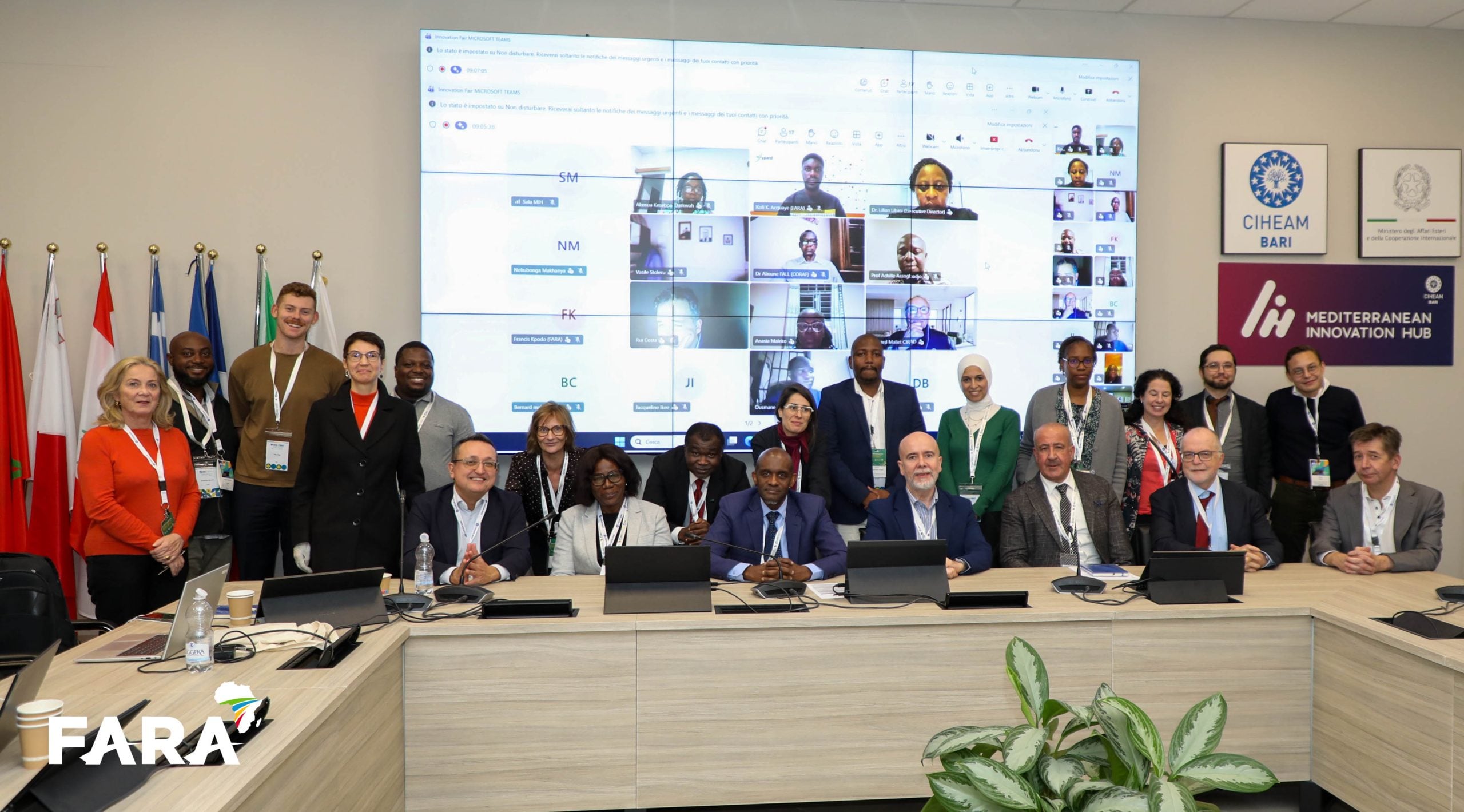
The International Research Consortium on Food and Nutrition Security and Sustainable Agriculture (IRC-FNSSA) held its 3rd General Assembly on 23 November 2026 in Bari, Italy, on the margins of Mediterranean Innovation Agrifood Week (MIAW) 2026. The meeting brought together Consortium members, Council and Secretariat representatives, Functional Working Groups and partner institutions to review operational progress, assess the inaugural Joint Work Programme (JWP) on Soil Health and Fertiliser Systems, and advance mechanisms for strengthening collaborative research and innovation under the AU–EU FNSSA framework.
As the penultimate General Assembly, the meeting marked an important milestone in the Consortium’s transition from establishing its operational structures to consolidating and advancing its collaborative instruments. Discussions focused on the contributions of the Functional Working Groups, lessons from the Soil Health and Fertiliser Systems JWP, and the institutionalisation of mechanisms to support coordinated action around the priorities of the renewed AU–EU FNSSA Roadmap for 2027–2036.
Reviewing IRC-FNSSA’s operational progress
The Assembly reviewed developments within the Consortium’s governance and operational structures, including the work of the Council, Secretariat and established Functional Working Groups.
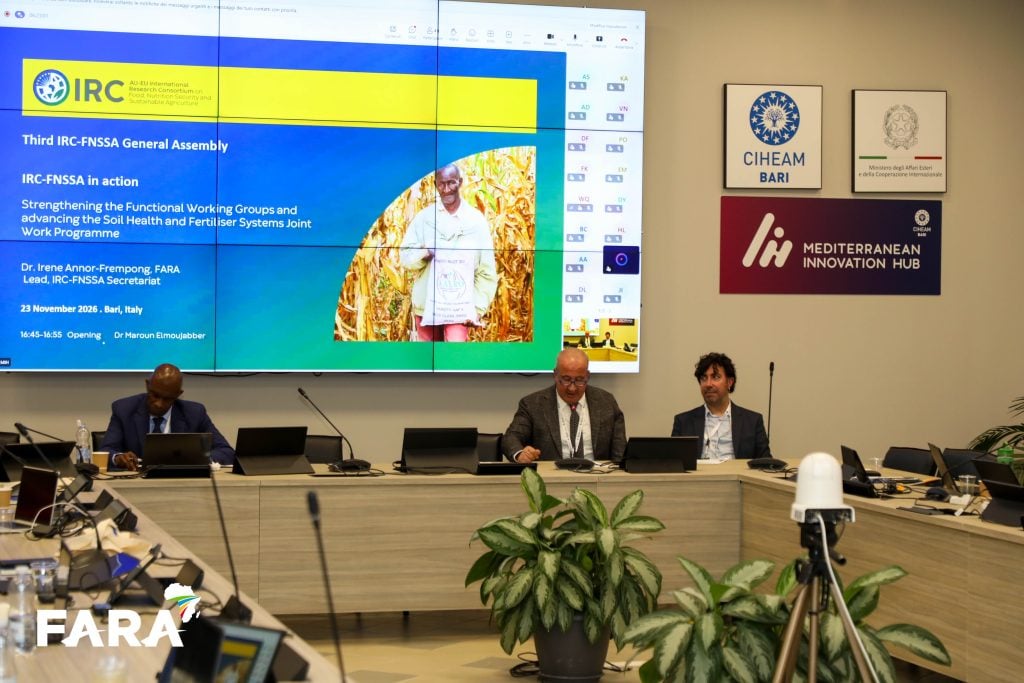
Participants examined the progress made in applying IRC-FNSSA’s network-of-networks approach, which seeks to connect existing research and innovation investments, institutional capacities and expertise across Africa and Europe. The discussions also considered the role of Portfolio Intelligence and Strategic Portfolios in strengthening evidence synthesis, identifying collaboration opportunities and supporting more coherent research and innovation programming.
Functional Working Groups advance the Soil Health and Fertiliser Systems JWP
A central component of the Assembly was the review of the Functional Working Groups’ contributions to the Soil Health and Fertiliser Systems Joint Work Programme, the Consortium’s inaugural JWP and Proof of Concept.
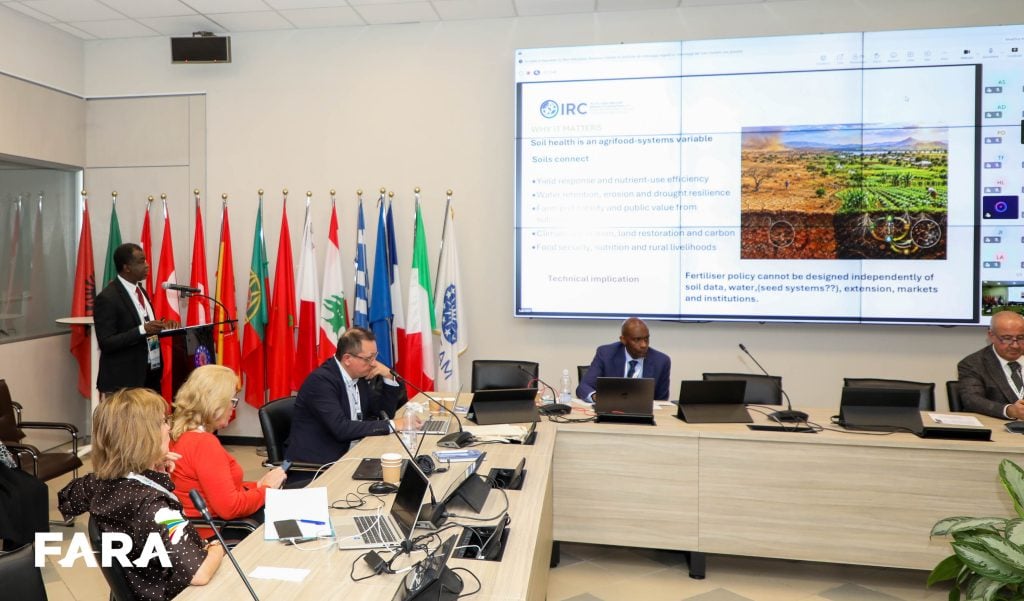
The Working Groups shared their respective insights, activities, emerging results, challenges and contributions to the JWP. The integrated review provided an opportunity to examine how the mechanism could facilitate collaboration among institutions, connect ongoing initiatives, identify complementarities and gaps, and strengthen the use of research evidence in policy and implementation.
The discussions consolidated lessons from the inaugural JWP and informed recommendations for refining the approach, including clearer institutional roles, coordination arrangements, implementation pathways and monitoring processes.
Endorsing the Joint Work Programme mechanism
An important outcome of the General Assembly was the endorsement of the Joint Work Programme mechanism as a principal instrument for international institutional collaboration under IRC-FNSSA.
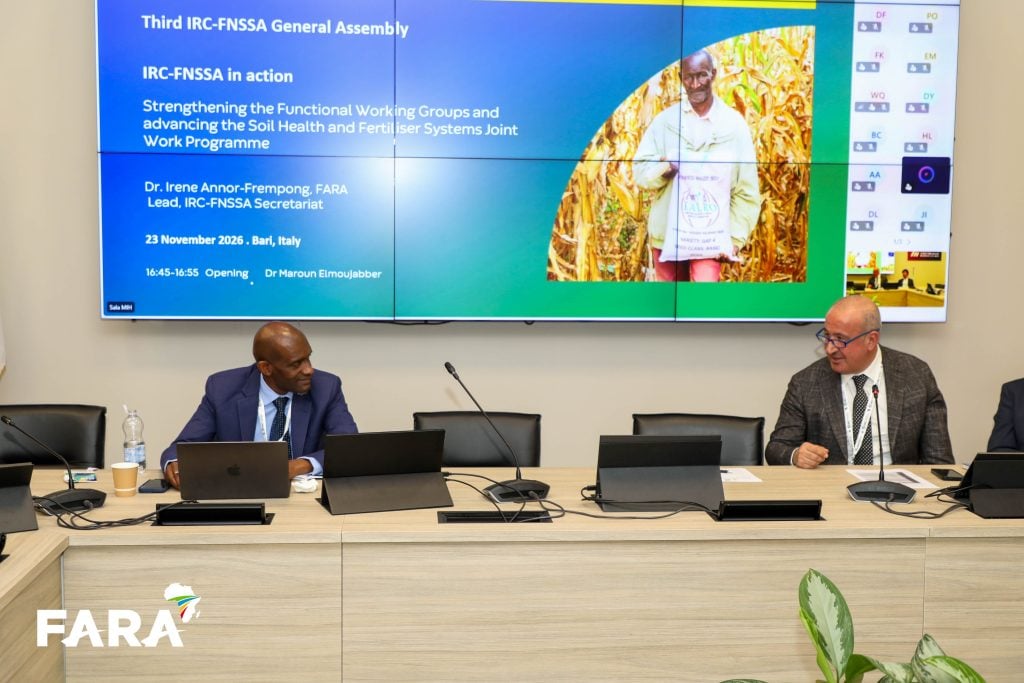
The Assembly welcomed the Soil Health and Fertiliser Systems JWP as the inaugural Proof of Concept and called for further refinement of the mechanism’s operating guidance, selection criteria, institutional responsibilities, monitoring arrangements and approval pathways for future JWPs.
The endorsement provided an important basis for using the JWP approach to align existing programmes, expertise and institutional resources around shared priorities of the AU–EU FNSSA Roadmap, while strengthening coordination and avoiding unnecessary duplication of research and innovation efforts.
Endorsing the Annual Research-to-Action Forum in principle
The Assembly also endorsed in principle the establishment of the IRC-FNSSA Annual Research-to-Action Forum (RAF) as a proposed flagship mechanism for connecting scientific evidence and innovation with coordinated, institutionally owned action.
The proposed Forum is designed to move beyond conventional scientific conferences by creating a structured platform for exchanging research and innovation insights, strengthening institutional collaboration, developing joint actions and reviewing progress towards Roadmap implementation priorities.
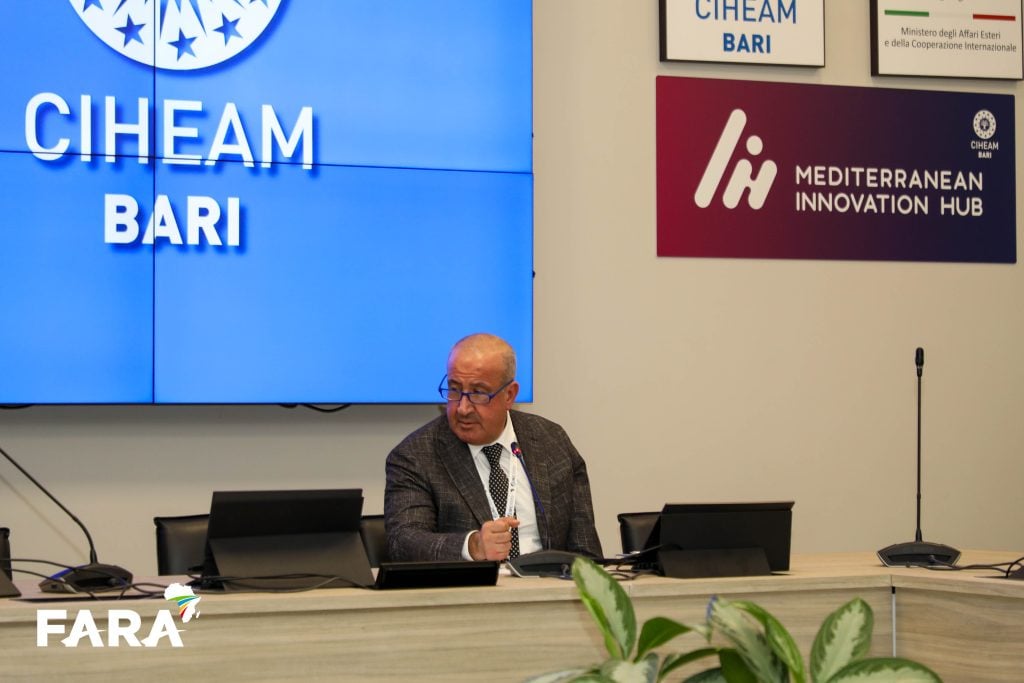
Following the endorsement in principle, CIHEAM Bari expressed concrete commitment to host the inaugural IRC on FNSSA Research-to-Action Forum (RAF). The Assembly also called for the IRC-FNSSA Council and Secretariat, working with the Functional Working Groups and Anchor Institutions, to develop an operational and resource plan for a possible inaugural edition in 2027. The proposal was also recommended for submission through the appropriate channels for strategic guidance from the AU–EU FNSSA Working Group.
Agreeing follow-up priorities and institutional responsibilities
The meeting concluded with a review of priorities towards the final General Assembly and agreement on follow-up actions to advance the endorsed mechanisms. These included refining the JWP operating arrangements, developing the operational and resource plan for the Annual Research-to-Action Forum, and clarifying institutional responsibilities and resource requirements.
The Assembly also consolidated the issues requiring further consideration by the IRC-FNSSA Council and the AU–EU FNSSA Working Group, ensuring that the outcomes of the meeting could inform wider strategic engagement and the continued operational development of the Consortium.
Strengthening Africa–Europe research and innovation cooperation
The outcomes of the 3rd IRC-FNSSA General Assembly represented an important step in strengthening the Consortium’s role as a coordination and collaboration mechanism within the AU–EU FNSSA partnership.
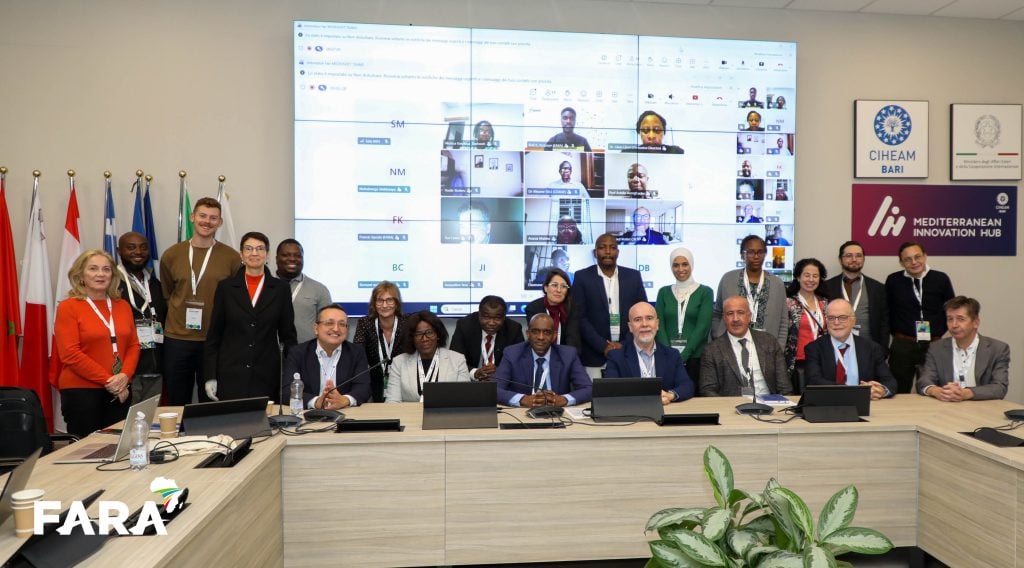
The endorsement of the JWP mechanism and the Annual Research-to-Action Forum in principle provided practical instruments for connecting research institutions, policy actors and implementation partners around shared priorities. Together with the lessons from the Soil Health and Fertiliser Systems Proof of Concept, these outcomes reinforced IRC-FNSSA’s contribution to advancing more coordinated, evidence-informed and impact-oriented research and innovation cooperation.
As the Consortium progressed towards its final General Assembly, the meeting helped establish a clearer direction for consolidating its operational model and sustaining collaborative action in support of resilient and sustainable agrifood systems in Africa and Europe.
Source: https://irc-ceafirst.org/

Leave A Comment