


By Abdulrazak Ibrahim
Africa’s agrifood systems are facing unprecedented complexity. From climate change and escalating nutrition challenges to supply-chain disruptions and demographic growth, the continent’s food systems are increasingly vulnerable. These intersecting pressures hinder our ability to achieve the ambitions of the Comprehensive Africa Agricultural Development Programme (CAADP), the African Union Agenda 2063, and the Sustainable Development Goals.
At FARA, we believe the missing ingredient is strategic foresight — not just forecasting the future, but actively shaping it. Foresight enables us to anticipate emerging risks, design resilient pathways and align investments and policy with long-term transformation goals. Crucially, it brings together government, research institutions, the private sector, youth and civil society to guide future-proof action.
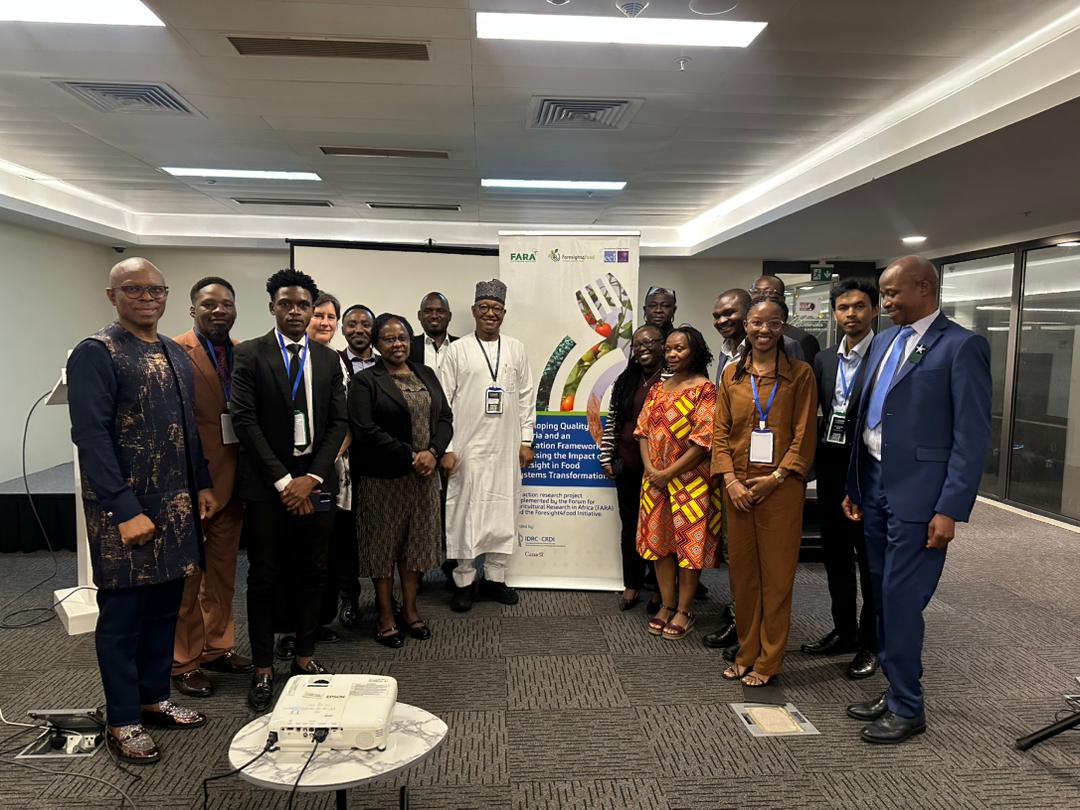
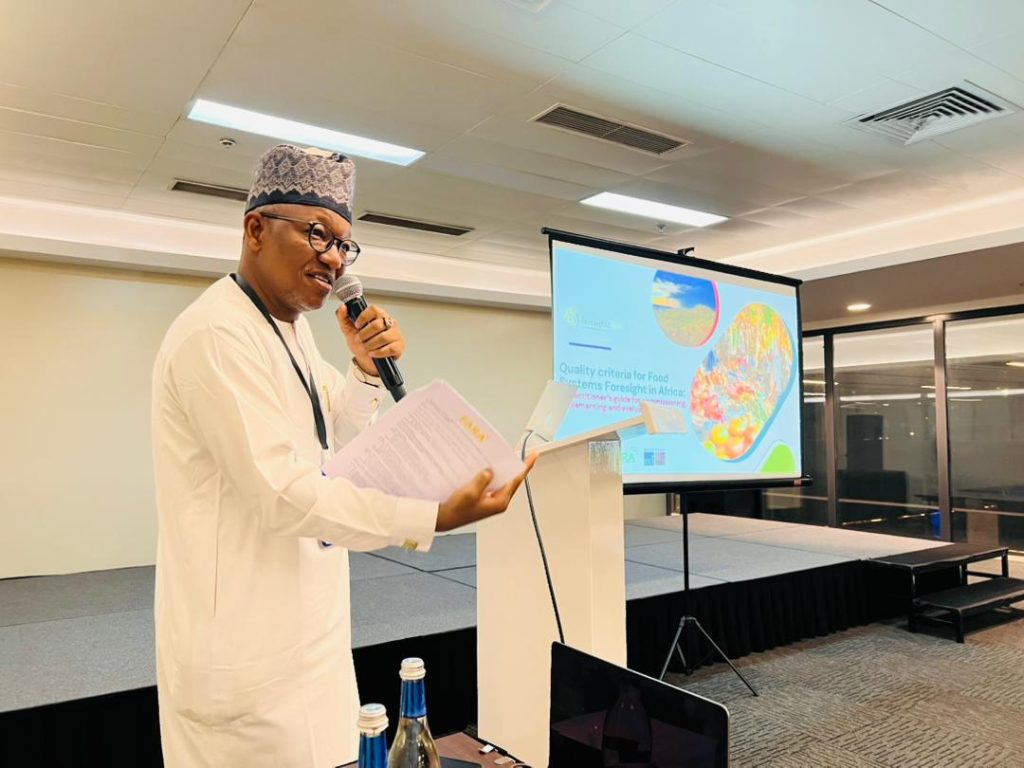
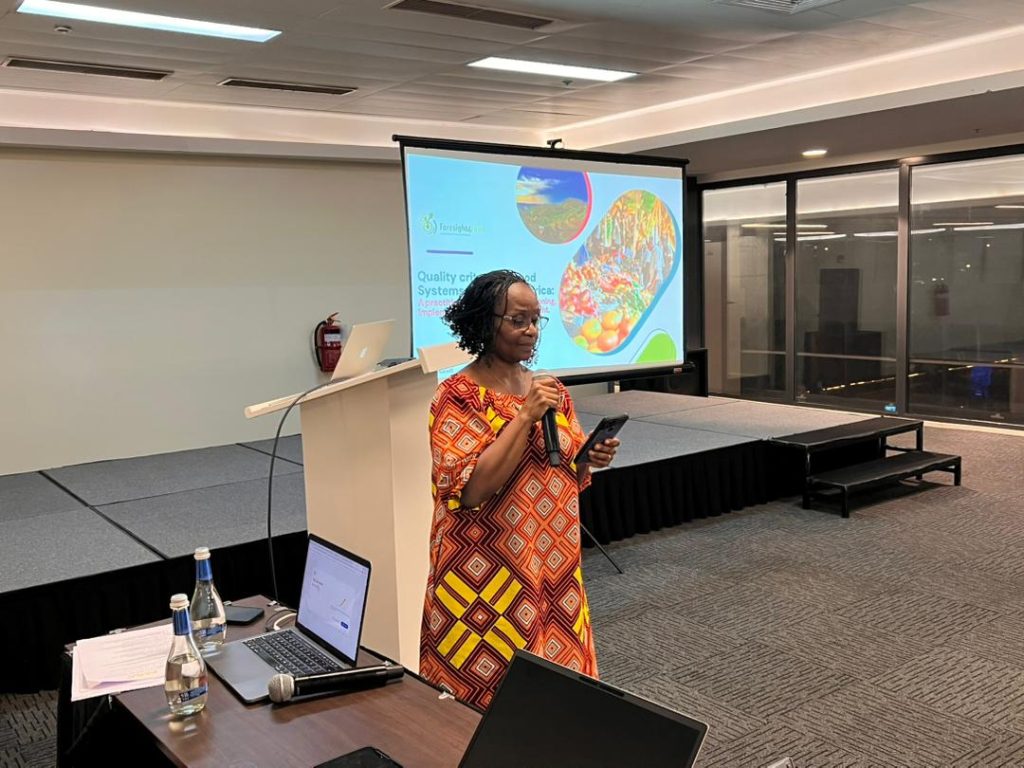
On 29 October 2025 in Kigali, in the margins of the 21st CAADP Partnership Platform and the 16th Africa Day for Food & Nutrition Security, FARA organised a special side-event titled “Shaping the Future of African Food Systems: Foresight, Quality Criteria & Impact”. The event was implemented in partnership with the Africa Foresight Academy (AFA) and the Foresight4Food Initiative, and supported by the International Development Research Centre (IDRC).
Key Messages from the Event
- Foresight must be embedded in planning, investment and policy systems — not treated as a one-off workshop.
- Inclusive partnerships are essential, with youth, women, local knowledge-holders and private-sector actors actively co-designing the future of food systems.
- Foresight outputs must lead to action — linking research, innovation, value-chains and investment, rather than remaining conceptual.
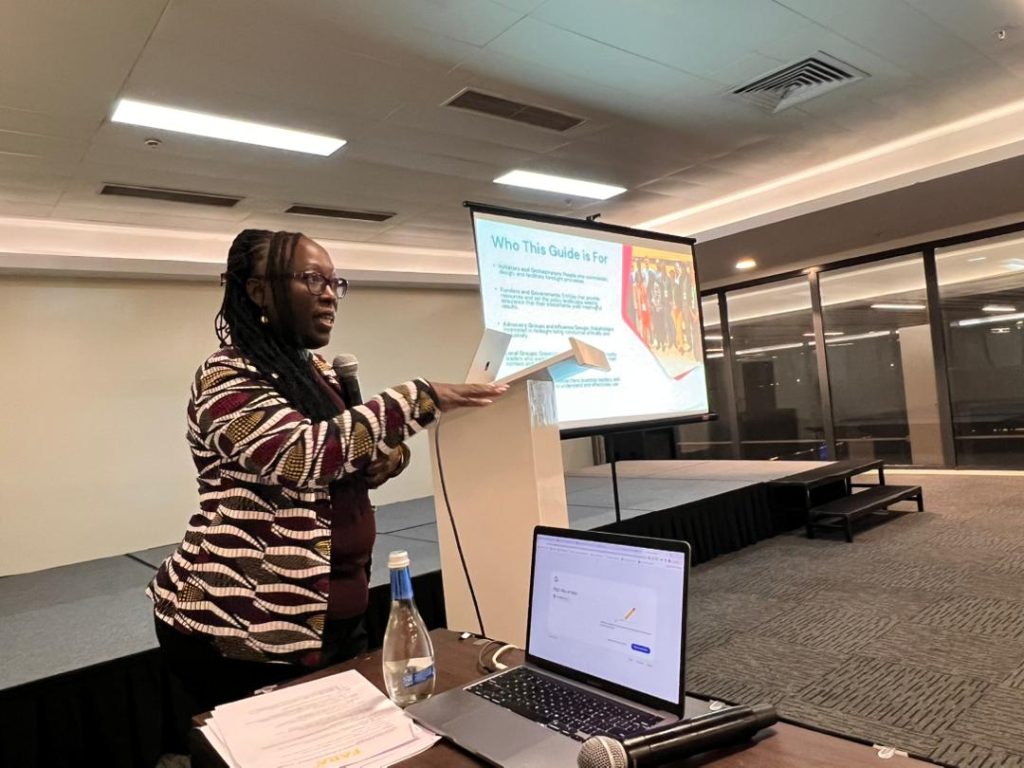
- The draft oversight tool — the Guide on Quality Criteria & Impact for Food-Systems Foresight — provides practitioners with practical measures to ensure foresight is inclusive, rigorous, context-appropriate and measurable.
- Foresight capacity-building, institutional mechanisms (e.g., national foresight hubs), and youth leadership are indispensable for achieving a lasting impact.
Integrating the Guide
The Guide, developed by FARA, AFA, and Foresight4Food, offers a practical resource for governments, institutions, practitioners, and partners. It emphasises:
- Working principles & quality criteria: inclusivity, contextual relevance, action-orientation, methodological rigour and ethics.
- Evaluation & impact framework: providing indicators and learning questions to assess how foresight contributes to change (capacity built, policy uptake, investment relevance).
- Procedural guidance: step-by-step processes from scoping and stakeholder mapping through to scenario design and embedding in policy/investment cycles.
- Institutionalisation & multi-actor engagement: guidance for embedding foresight in ministries, research systems, youth networks and value-chain partnerships.
Why this matters for Africa
Shorter, localised food-nutrition value. Chains anchored in climate-resilience and nutrition sensitivity offer enormous promise. But achieving scale requires more than production. We need foresight-based design of value chains, investment in processing & markets, youth-driven innovation, and inclusive systems that learn and adapt. Strategic foresight is the bridge that links these components.
FARA’s Commitment
For over a decade, FARA — in collaboration with its CAADP-XP4 partners (AFAAS, ASARECA, CCARDESA, CORAF) — has spearheaded foresight capability across Africa. Through AFA, we’ve built a continental platform for capacity development, tailored methodologies and youth leadership. In partnership with Oxford’s Foresight4Food Initiative and IDRC, we are now advancing:
- National foresight hubs supporting country planning and value-chain futures.
- Youth-led foresight practice via MOOCs, webinars and hands‐on experiences.
- A bespoke guide tailored to Africa’s contexts (indigenous knowledge, time-horizons, stakeholder participation).
Call to Action
We invite policymakers, researchers, agrifood enterprises, youth networks and financiers to join us by:
- Reviewing the draft meeting note and presentation from the Kigali side-event and reflecting on its relevance in your context.
- Considering how your institution can embed foresight: via curricula, youth platforms, policy units, and value-chain partnerships.
- Joining the AFA community to stay connected and exchange practices.
- Partnering with FARA and others to build resilient, nutrition-sensitive, locally rooted agrifood value-chains designed for Africa’s future.
Together, we can ensure that Africa’s future is not merely inherited — it is designed.


Leave A Comment