


Some foods disappear because they stop being useful. Others simply become overshadowed. Pigeon pea belongs to the second category. For generations, Cajanus cajan has been grown, cooked, and traded across tropical Africa, yet it rarely receives the attention given to better-known legumes such as soybean and cowpea. That is striking because pigeon pea brings an unusually broad set of qualities to the food system: protein, fibre and micronutrients for the plate, resilience for the farm and several uses beyond the grain itself.
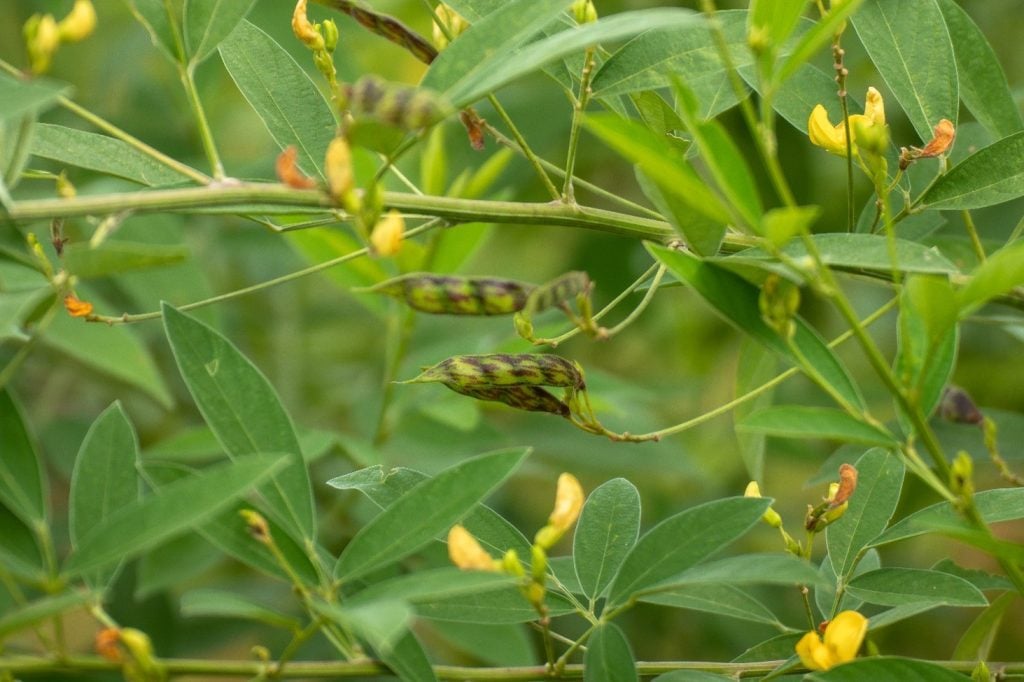
It is exactly the kind of crop the FAO and FARA had in mind in their 2024 Compendium of Forgotten Foods in Africa — a food that never left the continent’s fields and kitchens, but has slipped out of policy conversations, research funding, and public attention.
Pigeon pea did not originate in Africa. Archaeological and genetic evidence points to South Asia, particularly the Indian subcontinent, as the centre of its domestication thousands of years ago. From there, the crop travelled across tropical regions and became established in Africa, where East Africa developed into a secondary centre of pigeon pea diversity. Genetic studies of pigeon pea landraces have found that, within the region, Tanzania holds the greatest diversity, followed by Kenya and then Uganda. Today, the crop is grown in countries including Tanzania, Kenya, Malawi, Mozambique, and Uganda, and has become part of both food and farming systems there (Fuller et al., 2019; Yang et al., 2012; Songok et al., 2010).
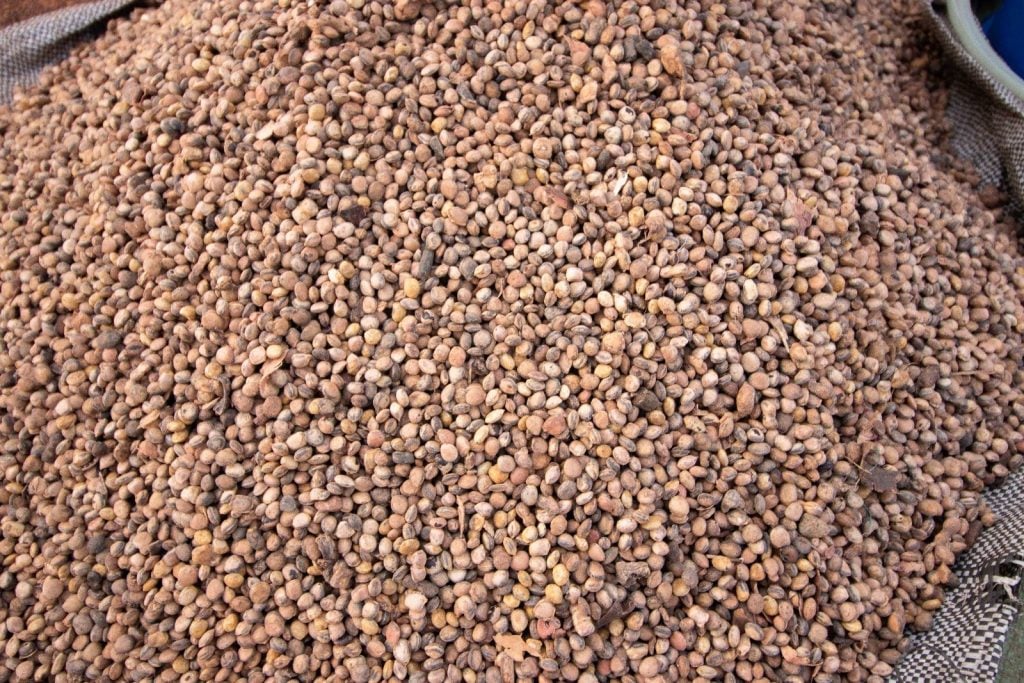
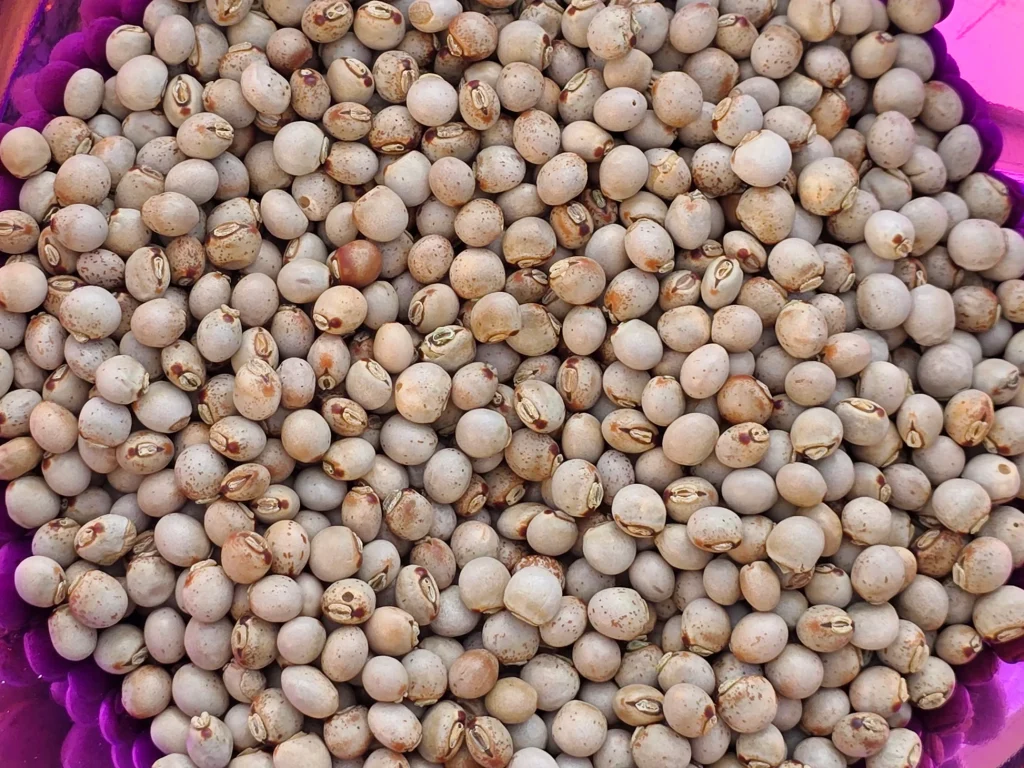
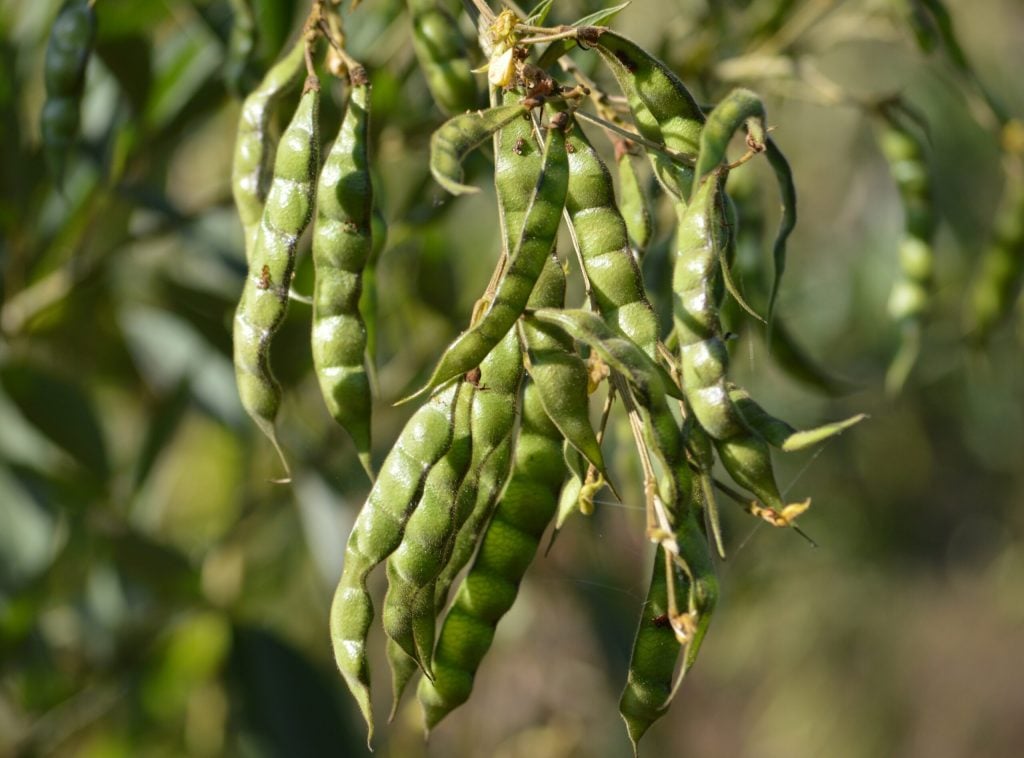
Its appeal begins with how much one plant can do. Immature pods can be eaten as a vegetable, while mature seeds are boiled, stewed, or split and prepared as dals and other dishes. The grain can be milled into flour for food products, including complementary foods. The plant can also provide fodder, while its residues and nitrogen-fixing ability give it a role beyond the kitchen.
Then there is the nutritional profile. According to the FAO/INFOODS Food Composition Table for Western Africa, 100 g of raw dry pigeon pea seeds contains about 311 kcal, 20.8 g of protein and 21.0 g of dietary fibre, alongside 121 mg of calcium, 4.5 mg of iron, 2.49 mg of zinc and 340 µg of folate. These figures are for dry seeds, so the basis matters when comparing foods (FAO/INFOODS, 2019).
Placed alongside cowpea and soybean using the same dataset, pigeon pea occupies an interesting middle ground.
Nutritional comparison of Pigeon Pea, Cowpea and Soybean
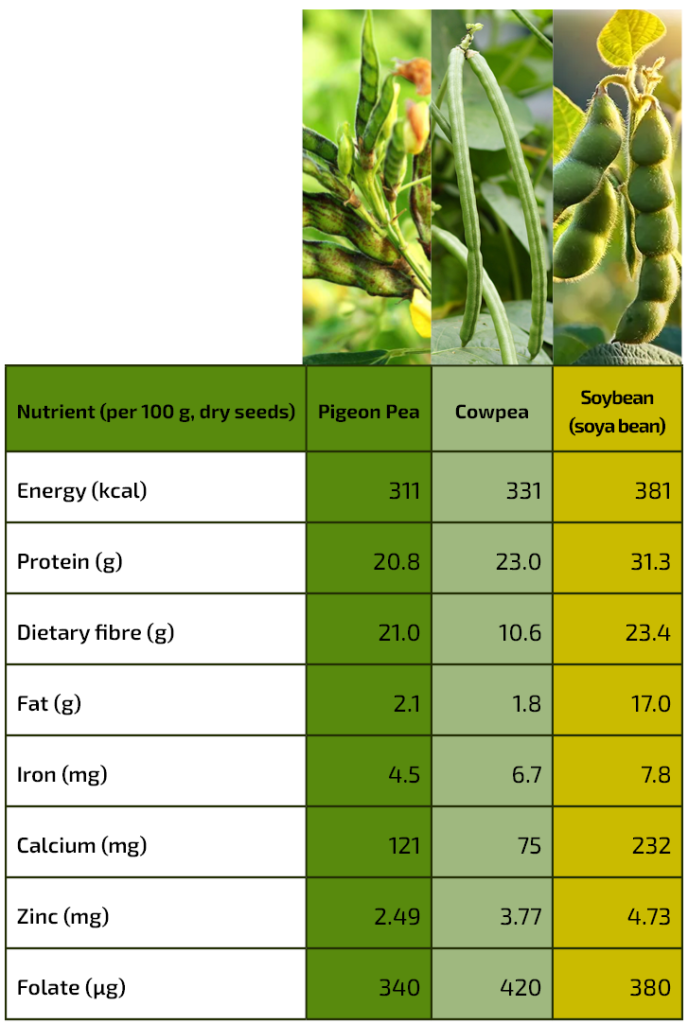
Source: FAO/INFOODS Food Composition Table for Western Africa, 2019, reproduced in the FAO/FARA Compendium of Forgotten Foods in Africa. Pigeon pea food code 03_032; cowpea 03_004; soya bean 03_008.
The numbers also tell an interesting story. Soybean leads on protein and several minerals, while cowpea records higher amounts of protein, iron, zinc, and folate in this dataset. Pigeon pea’s standout feature is fibre: 21 g per 100 g, nearly twice the amount recorded for cowpea and not far below soybean.
For diets built heavily around cereals, roots and tubers, that combination matters. Maize, rice, sorghum, millet and cassava provide important energy across African food systems, while legumes can add protein, fibre and micronutrients to those meals. Pigeon pea also supplies useful amounts of lysine, an amino acid that can be relatively limited in cereal proteins (Haji et al., 2024).
Protein content is only one part of the picture; how much of that protein becomes available through digestion also matters. In pigeon pea, laboratory research has shown that processing can affect protein digestibility: Sun et al. (2020) found that microwave treatment significantly increased the in-vitro digestibility of pigeon-pea protein. Human evidence provides another perspective: Hodgkinson et al. (2022), in a study comparing several protein sources, directly measured true ileal amino-acid digestibility of pigeon pea in adult humans. Together, these studies provide evidence on how processing and digestion affect the nutritional availability of pigeon-pea protein, while also showing why a single figure for overall human protein bioavailability cannot be assigned from these studies alone.
The result is not a miracle food. It is something more practical: an ingredient capable of making an ordinary meal more nutritionally substantial. That becomes particularly relevant when the focus shifts from the general diet to children.
Researchers have been testing pigeon pea in complementary foods and cereal-legume blends because the grain can be milled into flour and incorporated into foods already familiar to households. Studies in Africa have found that adding pigeon pea to cereal-based foods can improve their nutritional composition, including increasing protein and contributing minerals such as iron, calcium and zinc (Tura et al., 2025).
A 2023 Ghanaian study, for instance, examined germinated pigeon pea flour and its nutritional and functional properties, adding to research into how the crop could be developed into food ingredients rather than remaining a whole grain alone (Atuna et al., 2023).
The significance is bigger than a new flour recipe. Complementary feeding is a period when children need nutrient-dense foods in addition to breast milk, and the affordability and availability of ingredients can determine what reaches the household kitchen. A crop that can be grown locally, stored as a dry grain, and transformed into flour has an obvious practical advantage.
Those qualities matter beyond complementary feeding. The combination of protein and fibre makes pigeon pea particularly interesting for diets where dietary fibre and nutrient density matter. Controlled human research has also found a relatively low glycemic response to cooked pigeon pea compared with the reference food. In one study, pigeon pea seeds were soaked and boiled for 45 minutes before testing and had a glycemic index of 31 ± 4 when bread was used as the reference food (Panlasigui et al., 1995). That does not make pigeon pea a treatment for diabetes, but it adds another reason to pay attention to a legume whose nutritional value has often been overshadowed by its more famous relatives (Haji et al., 2024).
And the story does not end when the meal is finished. Pigeon pea is suited to many rainfed tropical and subtropical environments and is valued for its ability to tolerate periods of water stress. Botanically, it is a short-lived perennial shrub, typically living two to five years. Its growth habit also makes it suitable for intercropping with crops such as maize and sorghum. As a legume, it also forms symbiotic relationships that enable biological nitrogen fixation, giving it a role in soil fertility and crop rotations.
That combination gives pigeon pea a rare kind of versatility for a single crop. It can contribute protein to a household, fodder to livestock and nitrogen to the farming system. Its seeds can wait in storage until they are needed; its pods can be harvested earlier as a vegetable; its grain can be turned into flour when a different form is more useful.
This flexibility may be one reason pigeon pea has remained relevant across such different food cultures. In Africa, Asia, and the Caribbean, it has acquired different names, recipes and uses while retaining the same botanical identity. Its journey is a reminder that crops can travel far beyond their place of origin and become something different in the hands of the communities that adopt them.
Yet pigeon pea has never received the same global spotlight as soyabean. Perhaps that is partly because it does not fit neatly into one modern food category. It is not simply an oilseed. It is not only a pulse. It can be a vegetable when harvested young, a staple when mature, an ingredient when milled and a farming resource when its biomass returns to the field.
That versatility is easy to overlook precisely because it is so ordinary. But ordinary foods can carry extraordinary importance when they are affordable, familiar, adaptable, and capable of fitting into the realities of everyday life.
For Africa, the case for bringing pigeon pea back into greater use is therefore not built on a single nutrient or a fashionable health claim. It rests on accumulation: protein and fibre on the plate; micronutrients in the diet; possibilities for children’s foods; resilience in rainfed agriculture; nitrogen returned to the soil; and a crop that can move from the farm to several different kinds of food.
Pigeon pea has already travelled across continents. It has already survived changing cuisines and farming systems. It has already fed generations of people. What has changed is not the crop. It is how much attention we give it.
And that is one of the most interesting things about a forgotten food: sometimes it does not need to be rediscovered at all. It simply needs to be looked at with fresh eyes.
Prepared by: Whitney Asor Adade & Shaquille Pennaneach (FARA)
References
- Atuna, R. A., Sarpong Mensah, M.-A., Koomson, G., Akabanda, F., Dorvlo, S. Y., & Amagloh, F. K. (2023). Physico-functional and nutritional characteristics of germinated pigeon pea (Cajanus cajan) flour as a functional food ingredient. Scientific Reports, 13, 16627. https://www.nature.com/articles/s41598-023-43607-8
- FAO & FARA. (2024). Compendium of Forgotten Foods in Africa. Food and Agriculture Organization of the United Nations. https://openknowledge.fao.org/3/cc5044en/cc5044en.pdf
- FAO/INFOODS. (2019). Food Composition Table for Western Africa (2019): User Guide & Condensed Food Composition Table. Food and Agriculture Organization of the United Nations.https://www.fao.org/infoods/infoods/tables-and-databases/faoinfoods-databases/en/
- Fuller, D. Q. et al. (2019). Cajanus cajan (L.) Millsp. origins and domestication: South and Southeast Asian archaeobotanical evidence. Genetic Resources and Crop Evolution. https://link.springer.com/article/10.1007/s10722-019-00774-w
- Haji, M. et al. (2024). Nutritional composition, bioactive compounds, food applications, and health benefits of pigeon pea. Legume Science. https://onlinelibrary.wiley.com/doi/abs/10.1002/leg3.233
- Hodgkinson, S. M., Stroebinger, N., van der Wielen, N., Mensink, M., Montoya, C., Hendriks, W. H., de Vries, S., Stein, H. H., & Moughan, P. J. (2022). Comparison of True Ileal Amino Acid Digestibility between Adult Humans and Growing Pigs. The Journal of Nutrition, 152(7), 1635–1646. https://doi.org/10.1093/jn/nxac077
- Panlasigui, L. N., Panlilio, L. M., & Madrid, J. C. (1995). Glycaemic response to five legumes in healthy subjects. International Journal of Food Sciences and Nutrition, 46(2), 155–160. https://pubmed.ncbi.nlm.nih.gov/7621088/
- Songok, S., Ferguson, M., Muigai, A. W., & Silim, S. (2010). Genetic diversity in pigeonpea [Cajanus cajan (L.) Millsp.] landraces as revealed by simple sequence repeat markers. African Journal of Biotechnology, 9(22), 3231–3241. https://oar.icrisat.org/82/
- Sun, X., Ohanenye, I. C., Ahmed, T., & Udenigwe, C. C. (2020). Microwave treatment increased protein digestibility of pigeon pea (Cajanus cajan) flour: Elucidation of underlying mechanisms. Food Chemistry, 329, 127196. https://doi.org/10.1016/j.foodchem.2020.127196
- Tura, D. C., Belachew, T., Tamiru, D., & Abate, K. H. (2025). Nutritional enrichment of traditional complementary foods using underutilized nutritious plant foods in sub-Saharan Africa: their nutritional potential and health benefits: A scoping review. Applied Food Research, 5(1), 100726. https://www.sciencedirect.com/science/article/pii/S2772502225000368
- Yang, S. et al. (2012). Inference of the domestication history of pigeon pea (Cajanus cajan) from genome-wide sequence data. PLOS ONE. https://pmc.ncbi.nlm.nih.gov/articles/PMC3382124/
Join the continental discussion on Opportunity Crops/Forgotten Foods/Neglected & Underutilized Crop Species via the FARA Africa Community
Relive the highlights from the Regional Consultation on Opportunity Crops in Africa via YouTube
Get a copy of the Global & Africa Manifesto on Forgotten Foods, the Forgotten Foods Compendium and the Companion Document


Leave A Comment