


Written by Shaquille Pennaneach & Anselme Vodounhessi
Cotonou, Benin | 17th November 2026
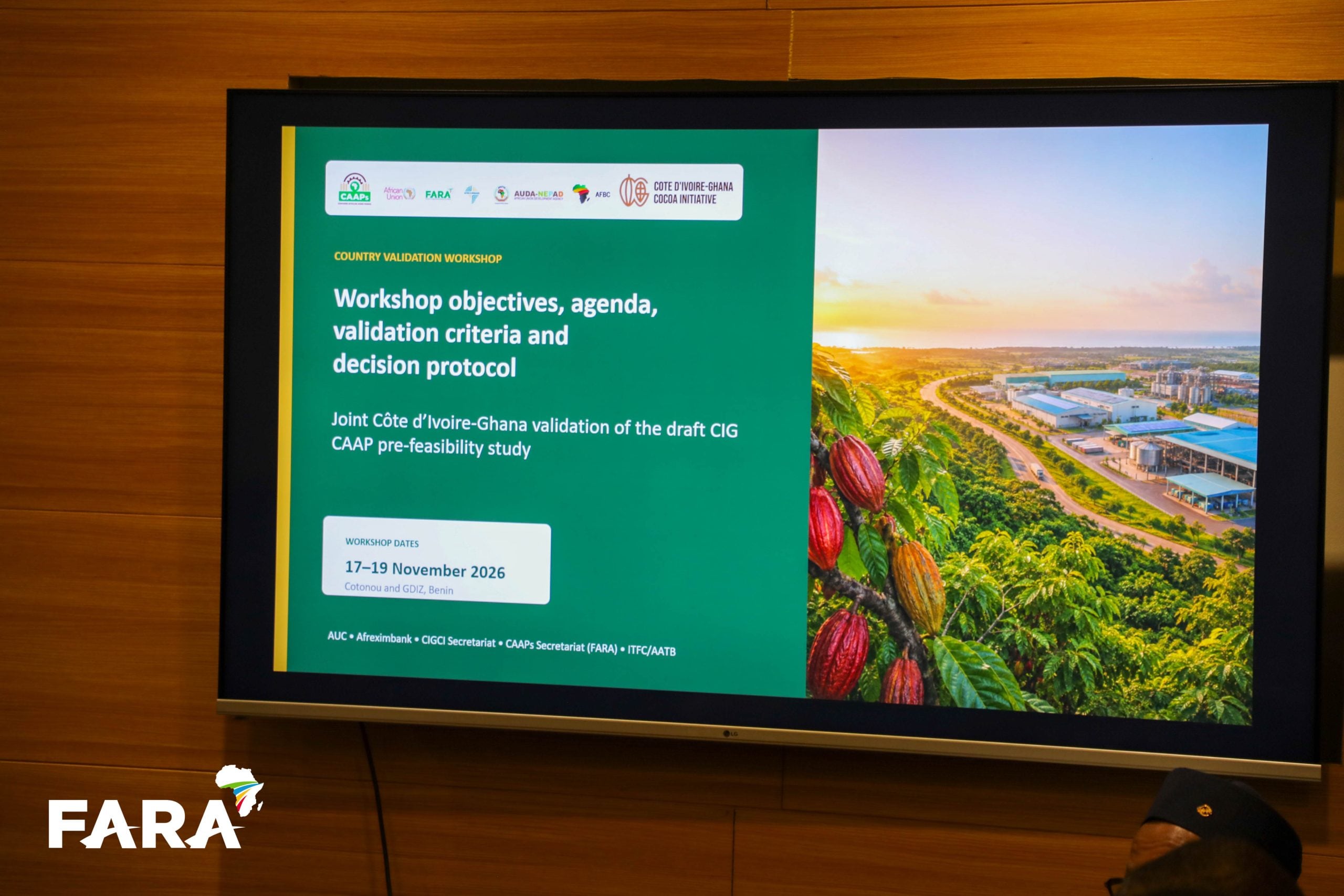
Côte d’Ivoire and Ghana are convening a three-day Country Validation Workshop in Cotonou, Benin (November 17-19), to jointly review the draft pre-feasibility study for the proposed Côte d’Ivoire–Ghana Agricultural Industrial Corridor (CIG CAAP). The workshop brings together representatives of the two countries, the African Union Commission (AUC), Afreximbank, the Côte d’Ivoire–Ghana Cocoa Initiative (CIGCI) Secretariat, the AUDA-NEPAD, the CAAPs Secretariat hosted by FARA, the African Union Business Council (AfBC), and technical partners such as UNECA, UNIDO and FAO, as well as financiers and private-sector stakeholders such as Gruner Energy.
The proposed CIG CAAP under the Common African Agro-Parks (CAAPs) Programme the Agenda 2063 flagship aligned with the African Continental Free Trade Area (AfCFTA), aimed at strengthening regional agricultural value chains, promoting agro-industrialisation and advancing joint African value creation. The proposed hub-and-spoke model seeks to connect farmers and production zones to aggregation centres, regional transformation centres in both countries, and a proposed agro-industrial park in Côte d’Ivoire, with access to regional and global markets.
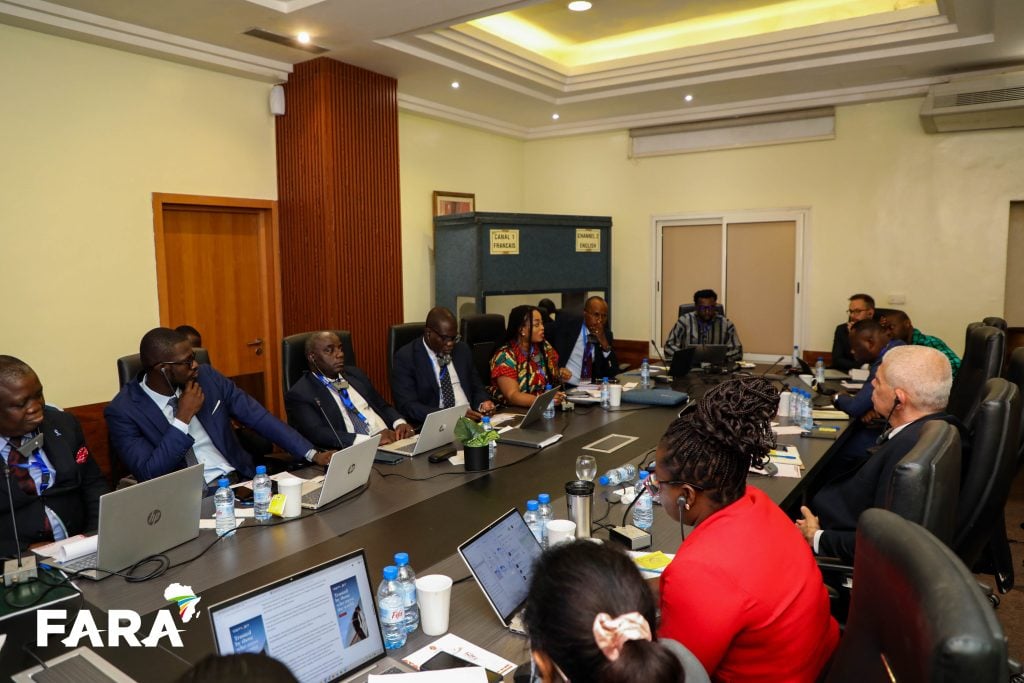
The validation workshop responds to the need for a shared, evidence-based assessment of the corridor’s feasibility before the project advances to full feasibility studies and investment preparation. While the draft pre-feasibility study presents a preliminary investment case, its assumptions—including cocoa supply, market demand, infrastructure costs, financing arrangements, governance and operational models—require meticulous scrutiny and validation by both countries. The study indicates an annual cocoa-processing throughput of +355,000 tonnes and estimated total capital investment of several hundred million.
The workshop’s central objective is to establish a country-owned quality assurance process through which Côte d’Ivoire and Ghana can confirm the evidence underpinning the study, identify and address material gaps or inconsistencies, agree on the strategic direction and outstanding conditions, and assign institutional responsibilities and timelines for follow-up.
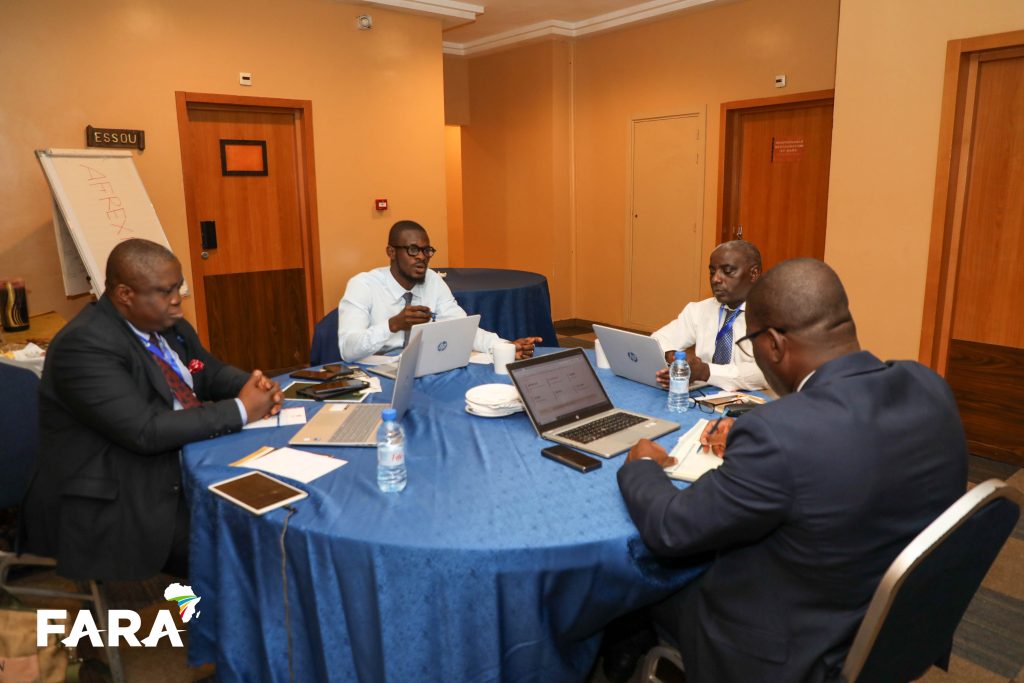
A section of participant in a breakout/working group discussion (Day 1)
Across eight technical sessions, participants are examining the corridor’s evidence base, commodity supply and market demand; policy, legal, trade and institutional arrangements; development scenarios, infrastructure and site configuration; binational governance and operating conditions; investment costs, financing and returns; and environmental and social safeguards. Particular attention is being given to equitable benefit-sharing, climate resilience, traceability, farmer welfare, and the participation of women, youth and small and medium-sized enterprises.
A structured learning visit to Benin’s Glo-Djigbé Industrial Zone (GDIZ) on 19th November (Day 3 of the workshop) will complement the technical deliberations. Participants will assess practical lessons in industrial-zone governance, infrastructure, investor services, trade facilitation, local sourcing, employment, SME linkages and environmental safeguards, identifying approaches that the proposed corridor could adopt, adapt or avoid.
The workshop seeks to produce consolidated country positions on the draft study; a documented validation register distinguishing validated issues, required revisions, matters deferred for further evidence or negotiation, and issues not validated; a provisional validation decision; and an agreed, time-bound action plan. The workshop is also expected to establish a clear pathway for revising the pre-feasibility study and progressing towards full feasibility, environmental and social impact assessment, legal structuring, investment engagement and financing.
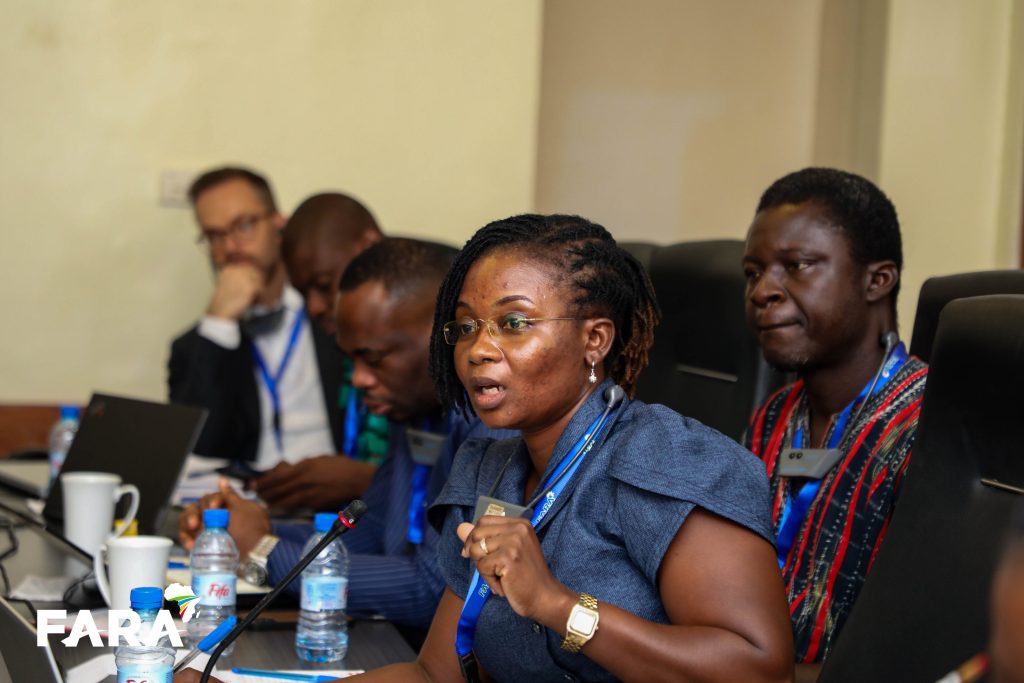
Through this joint process, La Côte d’Ivoire and Ghana seek to build a credible foundation for a cross-border agricultural industrial corridor—one that can strengthen regional value addition, deepen economic cooperation and contribute to Africa’s broader agricultural transformation and industrial development agenda.
Once the validation decision is adopted, the study will be revised according to the agreed comments and deadlines. the CAAPs Secretariat and all relevant partners and stakeholders will then lead the roadmap towards full feasibility, the environmental and social impact assessment, legal structuring of the binational vehicle, and engagement with investors and financiers.
For Côte d’Ivoire and Ghana, the Cotonou workshop marks the point where the CIG CAAP begins to move from study to investment-ready project. Its success will depend on whether both countries leave with a shared, evidence-based view of what must change and who is responsible for making it happen.
Find out more on the CAAPs initiatives via: www.faraafrica.org/caaps | https://www.linkedin.com/showcase/common-african-agro-parks-programme-caaps


Leave A Comment