The Alliance for Local Food and Nutrition Supply Chains in Africa (Alliance Africa) is a country-led alliance of African countries with a common objective of promoting integrated and multi-sectoral approaches, actions and solutions for building local indigenous and climate resilient food and nutrition supply chains in Africa, including fish and livestock.
Alliance Africa has been consistently supported, technically and financially by the African Union Development Agency-NEPAD (AUDA-NEPAD).
Alliance Africa is supported by two African Regional Economic Communities – ECOWAS and ECCAS
Alliance Africa operates within a background of health, environmental, man-made and economic crises that have clearly shown that African countries are often the most affected in times of global shocks and stresses. These shocks and stresses, when coupled with shocks and stresses on the continent result in limitation of food availability, affordability and accessibility, especially for marginalised, vulnerable and poor rural and urban communities.
Alliance Africa is one of the ‘Coalitions of Action’ of the UN Food Systems Summit and part of the ecosystem of support to the UN Food Systems Summit Coordination Hub supporting implementation of African countries Food Systems Transformation Pathway documents.
The Alliance for Local Food and Nutrition Supply Chains in Africa (Alliance Africa) was initially established during the UN Food Systems Summit (UNFSS) process in 2021 as the Resilient Local Food Supply Chains Alliance, a global alliance that was led by African countries and hosted and supported by the World Food Programme (WFP) from 2021-October 2024.
At a meeting in November 2024 African countries agreed and gave a mandate to develop, maintain and ensure stability of an Alliance that is supported by African countries and focussed on the important area of local food and nutrition supply chains.
In 2025 the Alliance structure was re-established as a Members’ Forum with a Board of Directors and a Secretariat.
In line with the mandate given by African member countries for Alliance Africa to be hosted by an African organisation in Africa, Alliance Africa is being hosted by the Forum for African Agricultural Research in Africa (FARA), headquartered in Accra, Ghana.
To strengthen its foundation and in respecting the mandate from member countries, Alliance Africa has been registered in Mozambique as a not-for-profit company. Alliance Africa’s activities will focus on the priorities of member countries and partners in Africa, while the scope will still cover advocacy and partnership at national, regional and global levels.
The governance structure consists of the following three elements: (i) a Members’ Forum (ii) a Board of Directors and (iii) an Executive Secretariat.
Members Forum: All African countries (African Union member states) are deemed members of Alliance Africa. Membership will also be opened to other interested countries and partners both in and out of Africa, especially those expressing their interest in contributing their expertise and resources to the collective mission of Alliance Africa. The process and criteria for membership is outlined in the Constitution.
Current Board of Directors
- Ms Jeanine M Cooper, Chair of the Board. Liberia Presidential Envoy on Climate Change and the Blue Economy, former Minister of Agriculture of Liberia with responsibility for Food Systems Transformation.
- Dr Verona Parkinson, Board Member. Chair of the Board of the Southern Africa Regional Forum for Agriculture Advisory Services (SARFAAS); Board Member of the Global Forum for Agricultural Advisory Services; Board Member of the African Forum for Agricultural Advisory Services (AFAAS);
- Dr Harold Roy-Macauley, Board Member. Former Executive Director of the Council for West and Central Africa Agricultural Research for Development (CORAF); former Director General of AfricaRice (a CGIAR institution); former Director of Regions and Partnership of CGIAR; currently Secretary General of Reach Workforce Foundation and CEO JADYFA SERVICES SUARL.
- Dr Sanjo Faniran– Board Member. National Convenor for Food Systems Transformation in Nigeria; Director, Social Development Department, Federal Ministry of Budget and Economic Planning.
- Dr Sloans Chimatiro– Board Member. President of the African Union (AU) Policy Research Network for Fisheries & Aquaculture in Africa.
Ms Samira Hotobah-During, Board Member and Executive Secretary of Alliance Africa heads the Secretariat and manages the operations of Alliance Africa
Alliance Africa’s constituents are all those who contribute to and are involved in the food and nutrition supply and value chains in African countries, such as national food systems convenors, nutritionists and CAADP focal points in African countries, the ministries of agriculture, food security and nutrition; national, regional and continental institutions operating in the agrifood, and retail food sectors, including fish and livestock – formal and informal local markets; smallholder farmers; SMEs; marginalized communities; universities and research institutions; women and youth groups, private sector, state and other non-state actors.
Alliance Africa’s vision is for African countries to invest in resilient local food and nutrition supply chains that will sustainably increase food supply and consumption of nutritious safe and healthy food in Africa through local production for local consumption.
Alliance Africa’s goal of contributing to transforming local food systems in Africa to withstand disruption and shocks in the short term, support resilient and inclusive economies and societies in the long term is integral to food sovereignty and to local production for local consumption as encapsulated in Alliance Africa’s mission.
Alliance Africa’s mission is a commitment to work with and collaborate with other countries and partners from both the public and private sectors, including civil society partners, towards the establishment of efficient and effective resilient local food and nutrition supply and value chains in African countries.
OBJECTIVE 1: ADVOCACY AND PARTNERSHIPS

Advocacy and partnership building at global, regional and national levels for building efficient and effective resilient local food and nutrition supply chains, including promoting inclusiveness in developing solutions to address environmental degradation, climate change, gender inclusion, nutrition and youth issues.
Actions will be initiated to widen the narrative on policy debates around locally produced food, nutritious and climate resilient crops, fish and livestock at national and international levels. Thus far the narrative has underlined the importance of international exports and trade while often disregarding the crucial role of local production of local food and local and cross-border regional markets for local consumption and trade.
OBJECTIVE 2: FACILITATE PEER-PEER KNOWLEDGE SHARING, EXPERTISE AND EXPERIENCES

Peer-peer knowledge sharing, expertise and experiences across systems and countries – including South/South Triangular Cooperation (SSTC) will be facilitated to leverage capacities and resources and facilitate access to peer knowledge, experience and best practices.
Peer exchange field visits will be organized to allow countries to learn from each other about programmes and policies that target market inefficiencies, enhance food governance, promote value addition to crops.
OBJECTIVE 3: FACILITATE TECHNICAL SUPPORT TO NATIONAL AND REGIONAL SYSTEMS
Traditional and non-traditional partners (such as private sector, foundations) will be mobilized in support of African countries’ efforts to identify and develop interventions and programmes that address country priorities. Country priorities will be identified, upon request from countries and other constituents, through technical missions, so that priority requirements are jointly identified for technical assistance.
-
Building Resilience – in conflict and unstable situations, responding to crises, impact of climate changeFocus on Local Agri-food – for nutrition, formal and informal markets, local production for local consumptionSustainable and Resilient Local Food and Nutrition Supply Chains– food systems governance, role of women and young people, livestock, fisheries, post-harvest loss, food loss and waste
Implementation of the three pillars contribute to:
- Achievement of Strategic Objective 5 – Building Resilient Agri-food Systems – of the Comprehensive Africa Agricultural Development Programme (CAADP)’s Strategy and Action Plan 2026-2035 (Building Resilient Agri-Food Systems in Africa).
- Achievement of 10 of the Sustainable Development Goals (SDGs 1, 2, 3, 5, 8, 9, 10, 11, 12, 17, (and the related SDGs 13 and 15).
Advocacy and partnership activities in 2025
- UNFSS+4 Stocktake, Addis Ababa – 27th – 29th July 2025
- Side Event: “Showcasing Nigeria’s Innovations and Collaborations in Food Systems Transformation” (Sunday, 27th July 2025)
At this event Alliance Africa was represented by Samira Hotobah-During, Executive Secretary of Alliance Africa in place of Ms Jeanine Cooper Board Chair of Alliance Africa; Dr Sanjo Faniran, Board Member of Alliance Africa and the Nigeria National Convener for Food Systems.
This side event highlighted innovative, locally driven initiatives and policy advancements, showcasing Nigeria’s leadership in building resilient, equitable, and sustainable food systems. Through integrating grassroots actions with national and global goals, Nigeria is generating scalable, evidence-based solutions that advance gender equity, youth empowerment, and climate resilience. The event aims to share successes, foster collaboration, mobilize resources, and amplify underrepresented voices, positioning Nigeria as a model for inclusive food systems reform and inspiring similar efforts globally.
In her intervention, Ms Hotobah-During pointed out that Nigeria has been a longstanding and committed member of Alliance Africa and Nigeria has consistently demonstrated leadership and innovation in advancing impactful local food and nutrition initiatives. Nigeria’s dedication to fostering sustainable agricultural practices and improving nutritional outcomes serves as a model for other Alliance Africa member countries to emulate. Alliance Africa looks forward to deepening our collaboration with Nigeria and providing a platform to showcase best practices in Nigeria, inspiring collective progress across the region.
- Side Event: From Vision to Delivery: Sierra Leone’s Roadmap for Food System’s Transformation (Monday, 28th July 2025)
Alliance Africa was represented by Hon. Jeanine Cooper Board Chair and Samira Hotobah-During Executive Secretary Africa who both made interventions from the floor.
Sierra Leone offers a compelling model with Feed Salone –President flagship initiative. Notably, the government has made a deliberate effort to break down sectoral silos and promote cohesive action across ministries—through regular coordination, monitoring and follow-up, and shared data and information—an essential foundation for transformation.
Intervention on the floor by Alliance Africa focused on work of the Alliance and how it can collaborate with ongoing food and nutrition initiatives in Sierra Leone. Alliance Africa stressed the importance of upstream interventions, linking farmers directly to national supply chains and procurement programmes that will increase local production and consumption of local nutritious food and decrease dependence on importation.
- Side Event (Tuesday, 29th July 2025) – Fireside Chat: Why Corporate Accountability Matters
Alliance Africa’s Board Member Dr Sanjo Faniran in his position as National Convenor of Nigeria was a panellist in this event.
Dr Faniran spoke about Nigeria’s Food System Dashboard that provides data on food and nutrition and private sector intervention. The dashboard is a robust data driven infrastructure to support implementation and specifically to track food and nutrition outcomes, identifying regional disparities. Including the private sector in the dashboard means that private sector operators can help with food distribution efficiency. Dr Faniran highlighted the engagement with Alliance Africa exploring support with capacity building in the geo-political zone, stressing that people are determinants for inclusivity and capacities should be strengthened to get the desired outcomes for food and nutrition.
- Collaboration with CIP/CGIAR
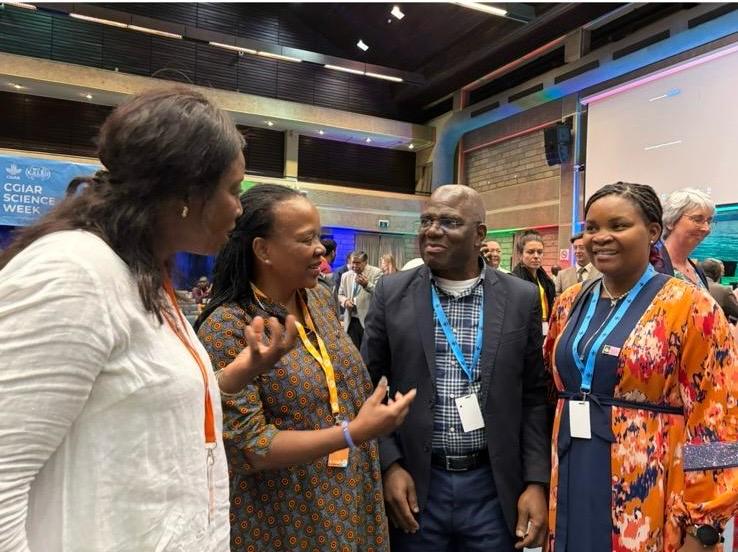
Further to preliminary discussions on collaboration at the CGIAR Science Week, the Executive Secretary and Board Member Dr Harold Roy-Macauley discussed potential areas of collaboration on the CGIAR Science program on Food Frontiers and Security (FFS) and collaborating specifically with CIP under the Urban Food Systems research area.
Alliance Africa was pleased to be invited to contribute to the early draft on the Area of Work3 (AoW3), Urban Food Systems which has five interconnected sub-AoWs: AoW3.1 Safe Urban Food Production; AoW3.2 Circular Bioeconomy; AoW3.2 Informal Food Markets; AoW3.4 Healthy Diets; and AoW3.5 Urban Food Systems Governance. Making a contribution to the draft presented an opportunity to identify areas that align with Alliance Africa’s key priorities, highlighting the potential value addition of the Alliance to facilitate key partnerships between countries and CIP.
Alliance Africa will be exploring a bilateral collaboration with CIP which will provide further opportunities to broaden the scope of the partnership, including targeting countries beyond those which are currently prioritised by the CGIAR Science Program, FFS.
It is to be noted that CIP/CGIAR has been a committed supporter of the Alliance, especially in the areas of research and innovation and knowledge sharing.
- Collaboration with GFAiR
Alliance Africa has joined the Global Forum on Agricultural Research and Innovation (GFAIR) to champion the revival of forgotten foods—neglected and underutilized species (NUS) that hold immense potential for sustainable food systems and trade between African countries and the diaspora.
On 26 – 30 April 2025 a field visit was conducted by the Forgotten Foods Consortium and Food Bridge, supported by the Global Forum for Agricultural and Innovation Research (GFAIR). The Executive Secretary of Alliance Africa joined the field study (the study can be read here).
For Alliance Africa, its partner countries and smallholder farmers investing in the production of Forgotten Foods present an opportunity for countries to (i) especially invest in these farmers so that they can raise their income level and (ii) expand SMEs and provide job opportunities for young entrepreneurs through trade to the African diaspora.
If the growth in the ethnic food market in the diaspora is strategically tapped, the market for African Forgotten Foods (AFFs) in the United Kingdom, for example, could grow from niche to mainstream in 5–10 years. Furthermore, potential revenue for AFF imports and value-added products (e.g. flour, snacks, beverages) could reach tens of millions annually, stimulating agrifood trade with African countries while benefiting smallholder farmers and exporters.
More information can be found here: https://gfair.network/content/gfair-collective-action-forgotten-foods
- Collaboration with APHRC
APHRC is now on board as new supporter of the Alliance. Alliance Africa and APHRC have held discussions on collaboration, especially as the two organisations can forge a link to conduct advocacy about the importance of food and nutrition supply chains for healthy outcomes.
Similar to FARA, APHRC has a pan-African focus and currently works in several African countries. APHRC is looking to extend its work in food systems and nutrition which complements Alliance Africa’s focus. In addition, APHRC’s technical strength and strong leadership as an African institution and targeting ‘the right to food’ can leverage and complement Alliance Africa’s objectives to support countries in their priorities for increased local production of indigenous and nutritious food and enhanced nutrition.
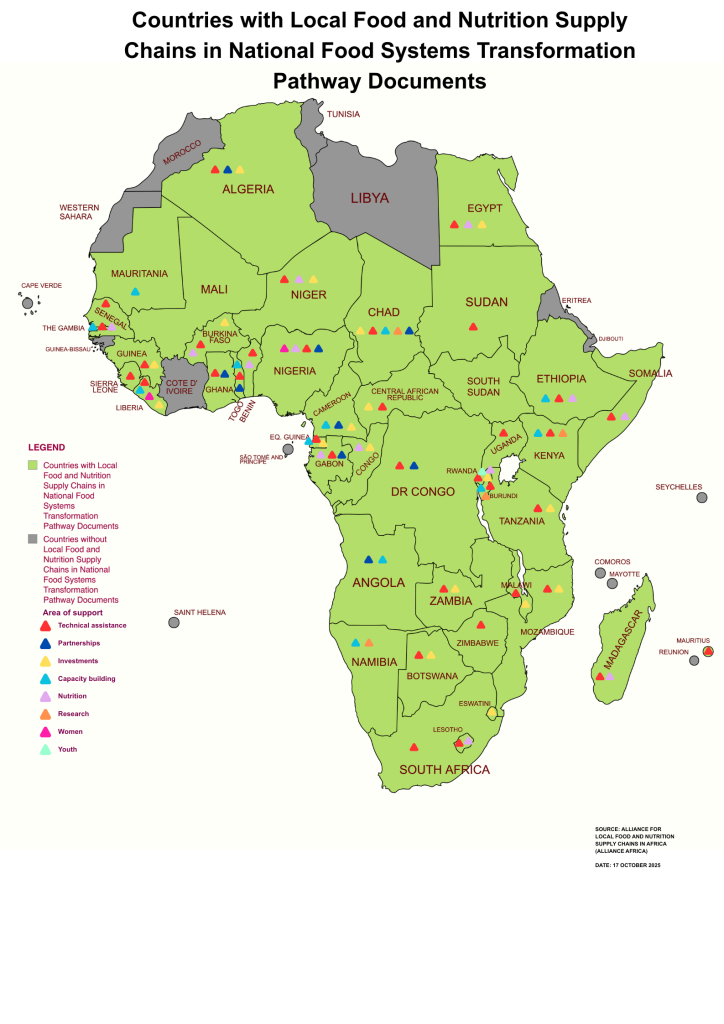
Country priorities for local food and nutrition supply chains and local production for local consumption were initially identified in a review of countries’ food systems transformation pathway documents during the UN Food Systems Process in 2021.
A new survey commissioned by Alliance Africa in 2025 shows that 41 African countries place a high priority on all actions that increase production of local indigenous and climate resilient food crops and fish and livestock.
Increasing local food supply and enhancing nutrition outcomes through local food and nutrition supply chains will contribute to the achievement of the relevant indicators of ten[1] of the seventeen Sustainable Development Goals (SDGs), as well as the related SDGs –13 and 15.
Key outputs of our work include supporting countries to increase investment in local food production, including fish and livestock – through advocacy and partnerships; support to develop local policies that strengthen local food and nutrition supply chains; facilitation of peer to peer knowledge sharing and best practices, including research and innovation knowledge; peer exchange visits; technical missions and mobilisation of technical assistance and technologies.
Alliance Africa will, through strengthened youth, women and Indigenous Peoples participation, state and non-state actors, including the private sector, provide support to African countries as they strive to implement their identified priority requirements for strengthened food and nutrition supply chains as part of their food system transformation objectives. [1] SDGs 1, 2, 3, 5, 8, 9, 10, 11, 12, 17.
Implementation of the three pillars contribute to:
- Achievement of Strategic Objective 5 – Building Resilient Agri-food Systems – of the Comprehensive Africa Agricultural Development Programme (CAADP)’s Strategy and Action Plan 2026-2035 (Building Resilient Agri-Food Systems in Africa).
- Achievement of 10 of the Sustainable Development Goals (SDGs 1, 2, 3, 5, 8, 9, 10, 11, 12, 17, (and the related SDGs 13 and 15).
Partners