


Faraafrica
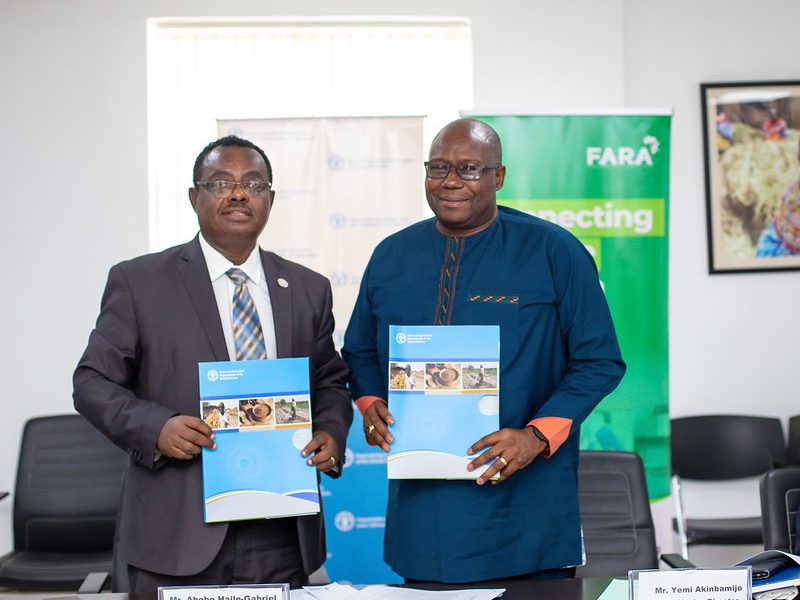
FAO and FARA renew partnership for agricultural research and innovation in Africa
FAO and FARA renew partnership for agricultural research and innovation in Africa FAO and the Forum for Agricultural Research in Africa sign 5-year agreement 31 March 2023, Accra – The Food and Agriculture Organization of the United Nations (FAO) has signed a five-year partnership agreement with the Forum for Agricultural Research in Africa (FARA). The deal renews and formalizes the

East African stakeholders get Knowledge Management Training to Catalyze Improvement in Rural Livelihoods
By Sharon Ibenu (AFAAS), Genevieve Apio (ASARECA), Daniel Peprah (FARA) Kigali-Rwanda: A consortium consisting of the Forum for Agricultural Research in Africa (FARA), the Association of Agricultural Research in Eastern and Central Africa (ASARECA), and the Eastern Farmers Federation (EAFF) are conducting a five-day training for implementing teams from the National Agricultural Research and Extension Systems in Eastern and Central

The Common Africa Agro-Parks submitted as a Flagship Program for Agenda 2063
The African Union Commission – Department of Agriculture, Rural Development, Blue Economy and Sustainable Environment (DARBE) and Economic Development, Trade, Industry and Mining (ETIM) – , the Forum for Agricultural Research in Africa (FARA), and the Africa Export, Import Bank (Afrexim bank) hosted a successful investor round table on the Common Africa Agro-Parks (CAAPs) Initiative at the African Union Commission

CAAPs and AfCFTA, huge potential for increasing agricultural productivity and expanding African trade -UN Secretary General
The UN Secretary-General lauds the African Union (AU) Common African Agro-Parks, (CAAPs) and African Continental Free Trade Area (AfCFTA) as potential for increasing agricultural productivity and expanding intra-African trade during his message at the ongoing Africa Food Summit Dakar 2 in Senegal. The three-day Summit, hosted by His Excellency Mr. Macky Sall, President of the Republic of Senegal and Chairperson

Experts propose climate smart solutions to boost food security in Africa
GNA-Experts in climate adaptation techniques have proposed the deployment of digital climate-smart solutions, including communication and information systems, to boost agriculture production and marketing on the continent. They say the continuous reliance on rain-fed agriculture in Africa was not sustainable, hence the need for governments to invest in digital infrastructure to support smallholder farmers to scale up their production amid
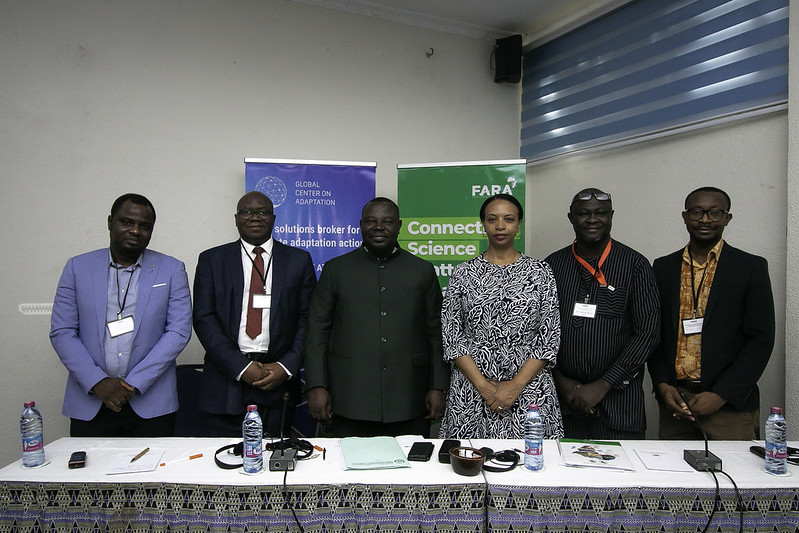
Adopt climate-smart solutions to boost food security in Africa – Experts
Experts in climate adaptation techniques have proposed the deployment of digital climate-smart solutions, including communication and information systems, to boost agriculture production and marketing on the continent. They say the continuous reliance on rain-fed agriculture in Africa was not sustainable, hence the need for governments to invest in digital infrastructure to support smallholder farmers to scale up their production amid

Understanding the African Soil: The Biggest Step in Sustainable Soil Management
By: Wole Fatunbi Senior Technical Cluster Leader and Innovation Systems Specialist, FARA Whenever the proper knowledge is not communicated or ignored, abuse is inevitable. This statement resonates accurately with the state of African soil, which is currently suffering from rapid degradation. Most soil users are under the illusion that Africa has the most significant proportion of arable soil in the

Africa Union Summit ShowCases Common African Agro Parks (CAAPs) Initiative
Niamey, 24th November 2022: The African Union Members States, the Regional Economic Communities, the United Nations (FAO, UNIDO, ECA), and Development Partners converged to discuss the implementation and financing modalities for the establishment of the Common African Agro-Parks (CAAPs). The event took place on the margins of the ongoing AU Summit on Industrialization and Economic Diversification, in Niamey, Niger, under
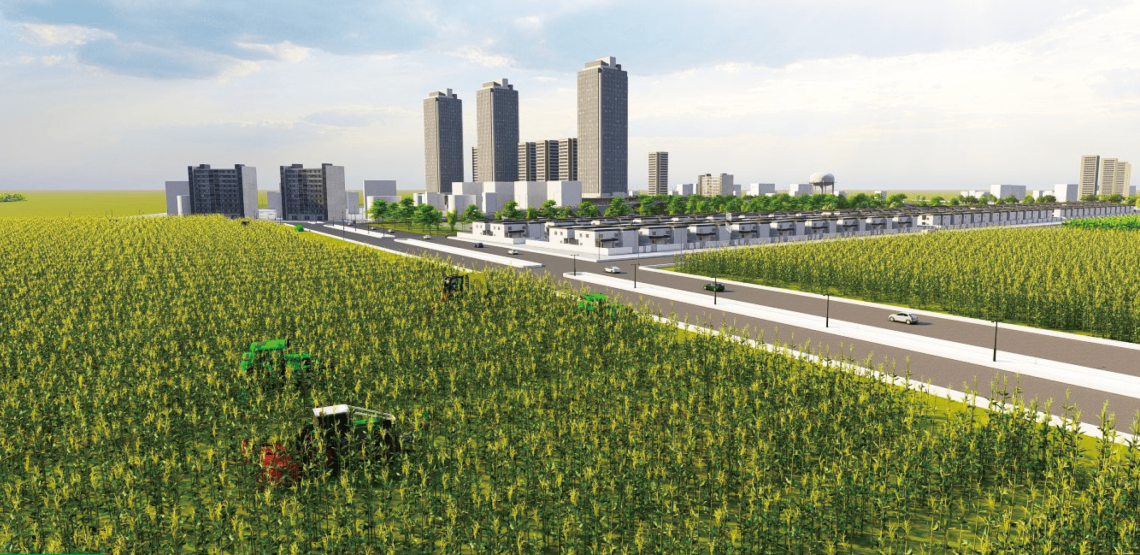
Agro-industrial parks as key policy tool to meeting the African Union Agenda 2063: The Africa We Want
NIAMEY, 24 November – “The creation of five large agro-industrial zones, one in each region of Africa, will serve as major agricultural hubs on the continent, and it is time to stimulate private and public investments in the agro-industries,” said African Union’s Commissioner for Agriculture, Rural Development, Blue Economy, and Sustainable Environment, Josefa Sacko. Speaking at a side event held

Abidjan II: African Development Bank, African Union Commission, CGIAR, Forum for Agricultural Research in Africa Join Forces to Strengthen Africa’s Food Systems
Agreement boosts efforts to equip farmers with much-needed technologies Sharm el-Sheikh, November 14, 2022 – Four organizations have come together to strengthen Africa’s food systems. The African Development Bank, the African Union Commission (AUC), the Forum for Agricultural Research in Africa (FARA), and CGIAR have signed an agreement, aligning their efforts to boost food and nutrition security on the continent. Following consultations* earlier this year, the “Abidjan II” communiqué posits that
Like Us On Facebook


Recent Comments