


By Wole Fatunbi, PhD
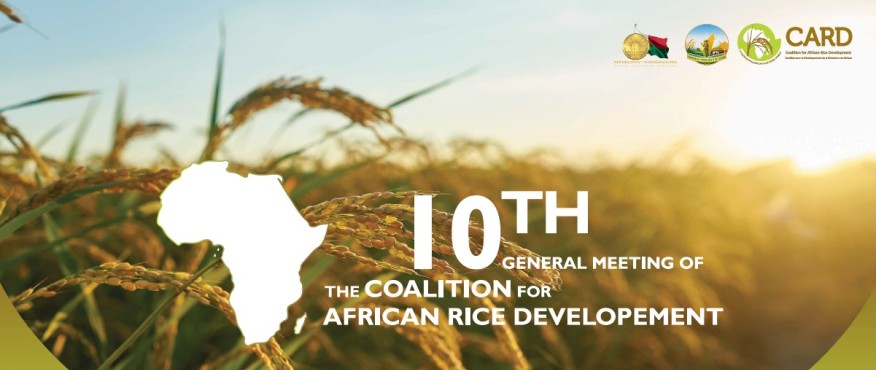
The 10th General Meeting of the Coalition for African Rice Development (CARD) is taking place from 9–12 March 2026 in Antananarivo, Madagascar, bringing together governments, research institutions, development partners, and private-sector actors committed to transforming Africa’s rice sector. At the opening of the meeting, Prof. Wole Fatunbi, Acting Director of Research and Innovation at the Forum for Agricultural Research in Africa (FARA), chaired the 21st CARD Steering Committee session, reaffirming the continent’s ambition to achieve rice self-sufficiency by 2030, when the CARD program winds up. The CARD was launched at the fourth Tokyo International Conference on African Development (TCAD IV) in Yokohama, Japan, in 2008. It aims to double rice production from 14 million tons to 28 million in the first 10 years, and its Phase II aims to raise it to 56 million metric tons by 2030 to meet the projected need. All in the drive for rice sufficiency in Africa. While rice production in Africa has risen significantly, there is still a significant gap to fill to achieve self-sufficiency.
Rice has emerged as one of the most important staple foods in Africa and is now central to the continent’s food security agenda. In West Africa alone, more than 240 million people depend on rice as a major dietary energy source, reflecting its growing role in urban and rural diets[1]. The rapid population growth, urbanization, and shifting dietary preferences have accelerated rice consumption across the continent, making it one of the fastest-growing food commodities in Africa (FAO, 2023)[2]. In West Africa alone, more than 240 million people rely on rice as a primary source of dietary energy, reflecting the crop’s central role in regional food systems; with higher consumption areas in Liberia, Sierra Leone, and Gambia, per capita annual consumption which is at “Asian levels” of about 90–120 kg or higher

Despite its strategic importance, Africa remains heavily dependent on imported rice. Estimates suggest that about 40% of the rice consumed in Africa is imported this may even be higher (≥ 60%) depending on the region, reflecting a significant gap between domestic production and demand. Sub-Saharan Africa has consequently become the world’s largest rice-importing region, importing over 22 million tons of rice annually (USDA, 2025). This dependency places substantial pressure on national foreign exchange reserves and exposes African food systems to volatility in global commodity markets.
The economic implications are considerable. Africa is estimated to spend between US$6 billion and US$9 billion annually on rice imports, depending on global price fluctuations and consumption levels[3] . These imports represent resources that could otherwise be invested in strengthening domestic agricultural production systems. The challenge facing Africa’s rice sector is not primarily technological but structural, socioeconomic, and infrastructural. Over the past decades, national agricultural research systems and international centers have developed improved rice varieties, including high-yielding and climate-resilient cultivars. However, the adoption of these technologies remains constrained by systemic factors, including weak rural infrastructure, fragmented markets, policy inconsistencies, and limited investment in agricultural value chains.
The Nigeria rice story provides a compelling example of both the potential and the fragility of the rice-sector transformation in Africa. Historical records indicate that Nigeria was largely self-sufficient in rice production in the early 1960s, producing approximately 360,000 tons annually, which was sufficient to meet domestic demand at the time[4] . However, as population growth accelerated and policy attention shifted toward the petroleum sector, domestic rice production failed to keep pace with rising demand. By the early 2000s, Nigeria had become one of the largest rice importers in Africa. In response, the Nigerian government introduced several policy initiatives to revitalize domestic rice production. Programs such as the Growth Enhancement Support Scheme (GESS) and the Anchor Borrowers’ Program (ABP) expanded farmers’ access to credit, fertilizers, and improved seeds. Evaluations of these programs suggest that they significantly increased rice production and stimulated investment in rice value chains, including the establishment of modern milling infrastructure across the country[5] .
These interventions contributed to a substantial expansion of domestic rice milling capacity, with more than 150 rice mills established across Nigeria during the period of rapid sector growth. However, recent developments suggest that sustaining these gains remains challenging. Rising fertilizer prices, climate variability, insecurity in farming regions, and disruptions in paddy supply have reduced the operational capacity of several rice mills in the country. Consequently, many mills reportedly operate below their installed capacity, illustrating the importance of consistent policy support and sustained investment in agricultural production systems.

Nigeria’s experience reflects a broader continental pattern. Africa possesses vast agroecological potential for rice production, including an estimated 190 million hectares of inland valley ecosystems suitable for rice cultivation, yet only a fraction of this potential is currently utilized[6] . Meanwhile, average rice yields across Africa remain relatively low, typically between 2 and 2.5 tons per hectare (t/ha), significantly below the global average (3.4 to 4.6 t/ha) and far below yields achieved in Asia (3.37 to 5.0 t/ha)[7].
The discussions at the CARD meeting in Madagascar highlight the importance of coordinated continental action to address this challenge. Africa already possesses the scientific knowledge, natural resources, and human capital required to transform its rice sector. What is required now is the alignment of science, policy, and investment. Strategic investments in agricultural research, efficient seed systems, irrigation infrastructure, and functional markets will be essential to unlocking Africa’s rice production potential.
Regional integration frameworks, such as the African Continental Free Trade Area (AfCFTA), also offer new opportunities to strengthen intra-African agricultural trade. Countries with comparative advantages in rice production can supply neighboring markets, thereby enhancing regional food security while stimulating economic growth.
If these efforts are sustained, Africa can significantly reduce its dependence on imported rice and move toward greater food sovereignty. The deliberations at the CARD meeting therefore serve as an important reminder that Africa’s future rice security will depend not only on technological innovation but also on coherent policies, resilient markets, and sustained political commitment.
Note: Wole Fatunbi is the Ag. Director of Research and Innovation at the Forum for Agricultural Research in Africa (FARA). Opinions in this article are solely those of Wole Fatunbi and do not represent the position of FARA and its partners.
[1] AfricaRice. 2019. Rice Sector Development in Sub-Saharan Africa: Achievements and Opportunities. Africa Rice Center, Abidjan.
[2] FAO. 2023. Rice Market Monitor. Food and Agriculture Organization of the United Nations.
[3] CARD. 2019. Coalition for African Rice Development: Phase II Strategy for Rice Self-Sufficiency in Africa.
[4] FAO. 2001. Increasing Rice Production in Nigeria: Lessons from the Past. Food and Agriculture Organization of the United Nations.
[5] Iliyasu, I., Lawal, S., & Mohammed, A. 2020. Evaluation of Nigeria’s Growth Enhancement Support Scheme and Anchor Borrowers’ Programme on rice production. Journal of Agricultural Economics and Extension, 24(3), 45–60.
[6] AfricaRice. 2022. Smart Valleys and Rice Sector Development in Africa. Africa Rice Center.
[7] FAO. 2023. Rice Market Monitor. Food and Agriculture Organization of the United Nations


Leave A Comment