


By ‘Wole Fatunbi PhD
Ag. Director of Research and Innovation, FARA
“The world is nothing but change; our life is only perception.” — Marcus Aurelius
This timeless wisdom is fitting for World Soil Day 2025, celebrated under the theme “Healthy Soils for Healthy Cities.” As Africa’s cities expand and evolve, it becomes increasingly clear that their sustainability depends on an often-overlooked foundation: the health of the soil beneath and around them. Soils are living systems that deliver essential ecological services, attenuating atmospheric toxins, degrading biotic and abiotic wastes, purifying water, cycling nutrients, storing carbon, and moderating temperature. Without healthy soils, urban environments lose their resilience, becoming vulnerable to flooding, pollution, food insecurity, and biodiversity collapse.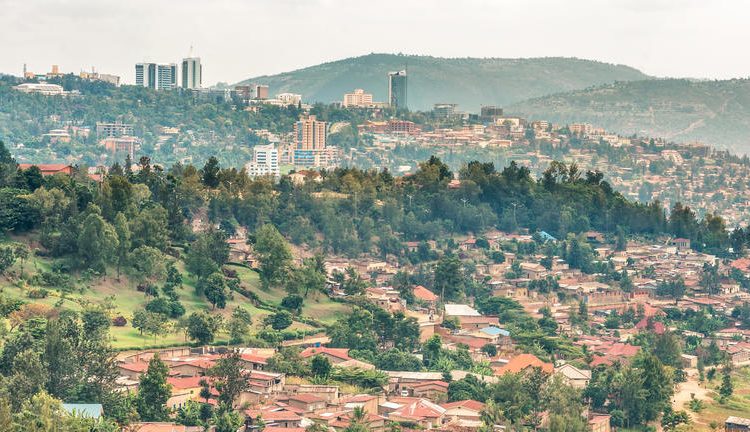
Africa’s urban growth is occurring across landscapes already burdened with high levels of degradation. Current assessments show that as much as 65% of the continent’s productive land is degraded, while about 45% faces risks of desertification. These trends weaken the soil’s ability to regulate water, sustain vegetation, maintain fertility, and support the peri-urban agriculture that feeds millions. Even more concerning is the accelerating pace of decline. Over the past two decades, the proportion of degraded land in Sub-Saharan Africa has nearly doubled, rising from 7.1% to 14.5%, a rate faster than the global average and indicative of mounting pressures on ecosystems.
Urban pollution further complicates this picture. The soils in many African cities now serve as sinks for heavy metals, hydrocarbons, microplastics, and industrial wastes. Research reveals that peri-urban farmlands around some cities in Africa contain multiple heavy metals that exceed permissible limits for food-producing soils. In others, wastewater-irrigated fields exhibit zinc concentrations that surpass WHO thresholds. Such pollution poses direct threats to “life on land,” undermining plant health, degrading microbial ecosystems, and exposing urban populations, especially those reliant on city-grown vegetables, to serious health risks.
These ecological failures translate into significant economic losses. In Africa, soil degradation contributes to an estimated 3% annual loss of agricultural GDP, draining resources that countries urgently need for infrastructure, climate adaptation, and urban development. This economic argument reinforces a simple truth: healthy soils are not an environmental luxury but a core asset for national stability and urban prosperity.
At the same time, urban and peri-urban agriculture remain a vital lifeline for African cities. Studies show that these systems supply up to 40% of cassava, 80% of poultry products, 90% of lettuce, and an astonishing 95% of fresh milk in some rapidly growing cities. When soils in these zones degrade or become contaminated, the nutritional well-being of urban households is directly jeopardized. This linkage between soil health and urban food systems underscores the urgency of coordinated action.
Aligning with the African Union Soil Initiative for Africa (SIA), 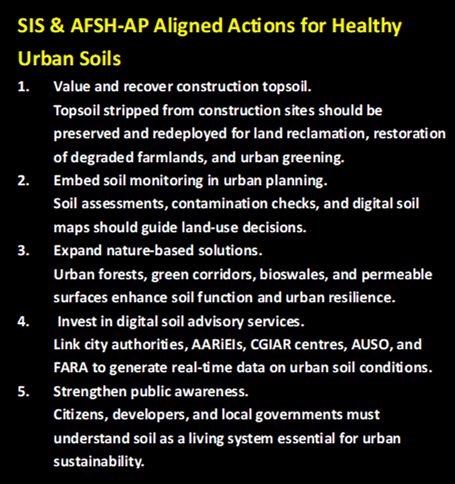 several key interventions stand out. The first is the placement of real economic value on topsoil. Construction activities often remove fertile topsoil that is treated as waste, yet this material could be redeployed to restore degraded farmland, support urban greening or rehabilitate peri-urban vegetable corridors. Recovering and reusing topsoil should become standard practice in African cities. Equally important is the institutionalization of soil monitoring within urban planning. Soil assessments, contamination checks, and digital soil maps should guide city design decisions and building approvals. Nature-based solutions such as urban forests, permeable pavements, rain gardens, bioswales, and green corridors can help restore soil function while improving urban microclimates. Investments in digital soil advisory services, driven by partnerships among FARA, AARiEIs, CGIAR centres, and the African Union Soil Observatory (AUSO), will provide the real-time data needed for informed decision-making. Public awareness must also deepen, ensuring that citizens, developers, and policymakers understand that soil is a living system whose health underpins urban resilience.
As we commemorate World Soil Day 2025, the message is clear: African cities can only be as healthy as the soils that support them. Safeguarding soil health through better policies, scientific innovation, responsible urban development, and recovery of topsoil is indispensable for building sustainable, vibrant, and equitable cities for future generations.


Leave A Comment