


Shaquille Pennaneach

Technical Engagement at AFREXIMBANK Headquarters Paves the Way for CAAPs Projects
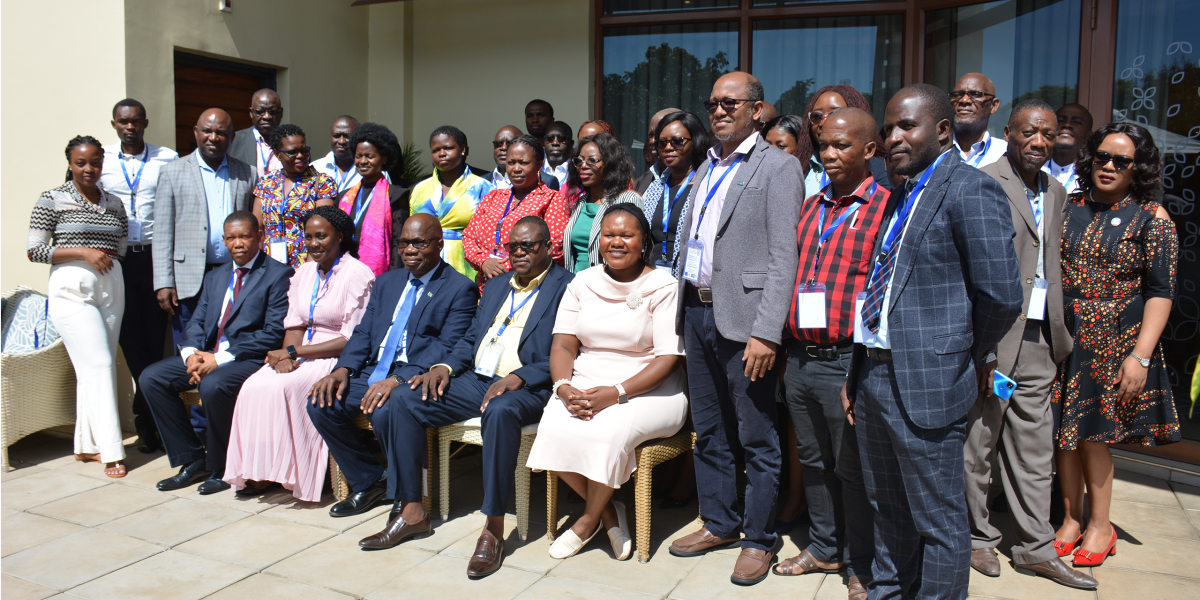
March 19, 2024 – Cairo, Egypt The AFREXIMBANK Headquarters played host to a significant technical engagement on March 15th and 16th, 2024. The event brought together key stakeholders from the Common African Agro-Parks (CAAPs), with a particular focus on representatives from the Zambia-Zimbabwe CAAP (ZimZam CAAP) and the Cote d’Ivoire-Ghana Cocoa CAAP (CIG CAAP). Chaired by Dr. Janet

FARA and RUFORUM inaugurate the Regional Multi-Actor Research Network on Agroecology to Support Regional Centres of Excellence related to the Green Transition
13 – 15 March 2024. Kampala, Uganda By Benjamin Abugri & Shaquille Pennaneach The Forum for Agricultural Research in Africa (FARA) and the The Regional Universities Forum for Capacity Building in Agriculture (RUFORUM) alongside the Agroecology Consortium, EC-Joint Research Centre (EC-JRC) and the EC Directorate General’s Department for International Partnerships (DG INTPA) have launched the Regional Multi-actor Research Network #RMRN_agroecology Project to support the Regional Centres
Harvesting Tomorrow: Foresight Fields of Millet and Sorghum in Southern Africa
12 Mar 2024 By Dr. Abdularazak Ibrahim & Mrs. Bridget Kakuwa-Kasongamulilo In Lusaka, forty-seven (47) stakeholders, including policymakers, scientists, farmer groups, youth, and women groups, gathered for a three-day workshop on Regional Foresight for Food Systems Training Workshop. Representatives across the region exchanged ideas, hopes, and dreams for a sustainable and resilient food future in the Southern African Development Community (SADC)

THE EU-AU Partnership launches the Strengthening Evidence-Based Policy Practice for Sustainable Food Systems Project.
15th – 17th February 2024: Alisa Hotel, Tema, Accra, Ghana The African Union and the European Union together with a number of implementing partners on the African continent and across Europe launched the Strengthening Evidence-Based Policy Practice for Sustainable Food Systems under the EU-AU Partnership #StEPPFoS Project at the Alisa Hotel in Tema, Accra-Ghana. The #StEPPFoS Project is designed to promote policy coherence and alignment

AFREXIMBANK and AUC Forge Strategic Partnership to Advance the CAAPs Initiative for Africa
Addis Ababa, 16th February 2024 The African Export-Import Bank (AFREXIMBANK) and the African Union Commission (AUC) have formalized a strategic partnership by signing a Memorandum of Understanding (MoU) to implement the Common African Agro-Parks (CAAPs) initiative. This landmark agreement, inked at the 37th AU Summit in Addis Ababa, solidifies the commitment of both entities to catalyze agricultural development and agro-industrialization

CEA-FIRST, the Consortium Europe Africa on Research and Innovation for Food Systems Transformation Project Kicks off
12 – 14 February 2024. Tema in Accra, Ghana. The African Union and the European Union alongside a number of implementing partners have launched the Consortium Europe-Africa on Research and Innovation for Food Systems Transformation #CEA_FIRST Project aimed at operationalizing the first priority of the AU-EU High level policy Dialogue (HLPD) focused on AU-EU International Research Consortium on Food and Nutrition Security for
STRENGETHENING AGRICULTURAL VALUE CHAIN DEVELOPMENT BETWEEN ZIMBABWE AND ZAMBIA
by HAPPY MULOLANI To catalyse economic development and enhance trade in Africa, requires actualising appropriate strategies and policies. This notion led to the conception of the Common Agro Industrial Park (CAIP) as part of the continental Common Africa Agro Parks (CAAPs) ratified by the African Union. The CAAP aspires to promote regional integration and trade among countries in Africa.

THE AFRICAN UNION COMMISSION CHARGES AFRICAN BUSINESSES TO EMBRACE THE CAAPs INITIATIVE – “Let’s partner to harness Africa’s $1 trillion Agricultural sector”.
In a Keynote Statement delivered on her behalf by the Forum for Agricultural Research in Africa’s Executive Director Dr. Aggrey Agumya, the African Union’s Commissioner for Rural Development, Blue Economy and Sustainable Environment, HE Ambassador Josefa Sacko calls on African state Leaders and High-Level Business Executives for collaborative efforts to address Africa’s food security and boost agribusiness during the Africa Prosperity Dialogues

German and African Institutions Partner with Stakeholders to Create an Inclusive Knowledge Hub on SLM for Northern Ghana
By Benjamin Abugri & Daniel Anyorigya (FARA) Accra, Ghana Introduction A consortium of three German research and implementation-oriented projects has begun developing a blueprint for Sustainable Land Management (SLM) covering all its dimensions regarding ecological, economic, and social aspects, especially gender equity. In Northern Ghana, two workshops were held at the Tamale campus of the University for Development Studies (UDS)

African experts meet in Kenya to discuss aflatoxin control measures
Experts from 18 African countries on Wednesday, December 6th 2023, opened a two-day meeting in the Kenyan capital of Nairobi to discuss innovative measures that can enhance aflatoxin control in the continent’s food systems. H.E Amb. Josefa Sacko, the commissioner for Agriculture, Rural Development, Blue Economy and Sustainable Environment of the African Union Commission (AUC), said that aflatoxin presents an
Like Us On Facebook


Recent Comments