


publications

YPARD In South Kivu/DR Congo toward Resilient Agriculture in the COVID-19 Period
By Erick NUNDA MBALA, Communication Expert, YPARD DRC/South Kivu Province Introduction In the face of the pandemic and the macabre consequences of coronavirus disease, all countries have been mobilized to mount the response against COVID-19. This multisectoral response aims, firstly, to stop the spread of the virus, equip medical facilities, organize screening, manage confirmed cases and accelerate research studies

CORAF Adjusting Priorities to Tackle COVID-19
In response to a recent call by the Economic Community of West African States (ECOWAS) and West African Ministers of Agriculture and Food, CORAF is making considerable tweaks to its programmatic priorities to support smallholder farmers, seed businesses, and seed cooperatives that are being increasingly hurt by COVID-19. Vulnerable farmers, businesses, and decision-makers are central to the CORAF COVID-19 Emergency

The CAADP XP4 Programme: Rallying Africa Ag Research Institutions towards Achieving CAADP-Malabo
The Comprehensive Africa Agriculture Development Programme (CAADP) ex-Pillar IV Africa Regional and Sub-regional Organizations for Agricultural Research and Innovation project (CAADP XP4), is funded by the European Union (EU) under the Development Smart Innovation through Research in Agriculture (DeSIRA) initiative and administered by IFAD. Programme goals and objectives The programme which brings together the major continental and sub-regional organizations AFAAS,

Dealing with food security in the face of COVID-19: Where Governments should focus
Ben Moses Ilakut: As the novel Corona Virus (COVID-19) continues to spread rapidly across the globe, countries across the world have shut down major socio-economic functions, putting livelihoods in a precarious situation. A genuine fear that the worst is yet to come in regards to food and nutrition security is looming. The months of April, May and even the proceeding ones

Silencing the Guns through Gender and Youth Inclusion in Agricultural Research for Development (AR4D)
By Karen Munoko The Forum for Agricultural Research in Africa (FARA) advances the systematic adoption of science-led solutions towards addressing Africa’s food insecurity challenges by promoting fundamental societal change. A necessary element in this respect is addressing youth unemployment, which constitutes a significant security risk in Africa. Unfortunately, the African youth are the key actors in conflicts while Africa imports
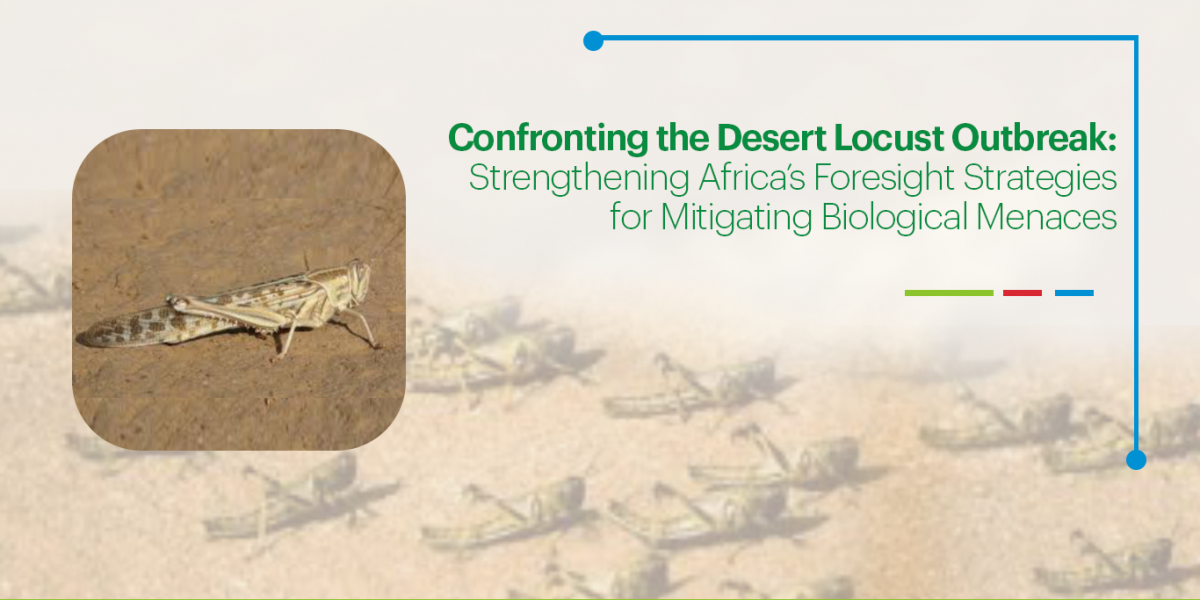
Confronting the Desert Locust Outbreak: Strengthening Africa’s Foresight Strategies for Mitigating Biological Menaces
The threat to food and nutrition security in Africa has increased with the reemergence of desert locust (Schistocerca gregaria) in Eastern Africa at a scale not seen in the last 7 decades. “In the Horn of Africa, the worst affected area, there is an unprecedented threat to food security and livelihoods as swarms increase in Ethiopia and Somalia and continue to move south to Kenya where

Foresight Africa: Top priorities for the continent 2020-2030
The new year 2020 marks the beginning of a promising decade for Africa. Through at least the first half of the decade, economic growth across Africa will continue to outperform that of other regions, with the continent continuing to be home to seven of the world’s 10 fastest-growing economies. Collective action among African and global policymakers to improve the livelihoods

Examining 100 Innovations and Breakthroughs for the Future and Africa’s Agriculture
The quest to power African agricultural growth in the next decade is driven by innovations, commercialization and youth empowerment; all of which are underpinned by megatrends in Agricultural Research for Development (AR4D) in Africa.

The Future of Jobs and Digital Revolution: Spotlight on Agri-competency Systems
Over the next 30 years, African workforce will grow by 800 million people, supporting a population that is projected to reach 2.5 billion in 2050. However, in 20 out of these 30 years, most of Africa’s population will remain rural despite rapid urbanization in many countries. This demographic shift fixes a spotlight on the need for preparedness for the changing

Will outright ban on Forex for importation of all food items to Nigeria augur well for the overall wellbeing of the Nation?
The call by the government of President Buhari to halt the release of Forex for the importation of food items to Nigeria sounds like a very radical approach to agricultural development. It is an hydra-headed issue with implications for various social, cultural and economic variables at micro and macro levels. The structural ban will appeal to the common man enthused
Like Us On Facebook


Recent Comments